How Sri Sri Ravi Shankar Helped Bring Peace to Colombia’s 52-Year Civil War

When we think of global peace efforts, our minds often turn to politicians or diplomats. But sometimes, a spiritual leader steps in and does what others can’t. One such figure is Sri Sri Ravi Shankar, whose work in Colombia is a powerful example of how compassion, dialogue, and non-violence can bring about real change—even in a country torn apart by over five decades of war.

For 52 years, Colombia was trapped in a brutal civil conflict between the Colombian government and the Revolutionary Armed Forces of Colombia, better known as FARC. This war led to countless deaths, displacements, and deep societal wounds. While many international organizations and leaders tried to help, the road to peace was long and uncertain.

That’s when Sri Sri Ravi Shankar entered the picture—not as a politician, but as a humanitarian and spiritual leader committed to peace. His approach was simple but powerful: promoting inner peace and mutual understanding as a foundation for outer peace.

He didn’t just make public statements or write letters. He went to Colombia and met with key figures on both sides of the conflict, including former rebels and political leaders. He emphasized the importance of forgiveness, compassion, and reconciliation—values that are often missing in political negotiations but are absolutely essential for healing.

What really struck me is that his involvement wasn’t symbolic. His presence and message made a real impact. He helped shift mindsets and encouraged both sides to move past decades of hostility and mistrust. His credibility and track record of resolving conflicts in other parts of the world gave him a unique authority.

So respected was his role in the process that Sri Sri was invited to attend the formal signing of the peace agreement in 2016. That moment marked a historic milestone for Colombia—and his presence was a testament to the power of non-violent action.

This whole story reminds me that peace doesn’t always have to come through power or force. Sometimes, it takes someone with a deep sense of humanity, someone who reminds people of their shared values and aspirations. Sri Sri Ravi Shankar did just that, and Colombia is better for it.

His efforts in Colombia are a shining example of how one person, armed with compassion and conviction, can help heal a nation
10 Cultural Habits That Might Surprise You: What’s Offensive in the U.S. But Normal in India

1. Directness and Honesty

  • In the U.S., being overly direct or blunt, especially when expressing negative opinions, can be considered rude or offensive. In India, people are often more indirect in communication, and being too blunt may not be as common, but being direct is generally not seen as offensive in the same way it might be in the U.S.

2. Pointing at People

  • Pointing directly at someone (whether with your finger or hand) can be considered impolite or offensive in the U.S. However, in India, it’s often seen as a casual gesture, especially when people are referring to something or someone in a crowd. It’s not always considered impolite in India.

3. Staring

  • In the U.S., staring at people can be seen as intrusive and rude. In India, however, especially in rural areas or among foreigners, people may glance or stare without it being seen as offensive. It’s a common, albeit culturally different, behavior.

4. Personal Questions

  • Asking personal questions about someone’s age, marital status, or income might be considered inappropriate or intrusive in the U.S. However, in India, such questions are often seen as part of regular conversation and are typically not seen as invasive or rude.

5. Respect for Elders

  • In India, it’s normal for younger people to touch the feet of elders as a sign of respect. This practice may seem odd or overly formal in the U.S. but is a deeply ingrained tradition in India, and it might not be understood or appreciated in the same way in the U.S.

6. Public Spitting

  • Spitting in public is generally viewed as offensive and unsanitary in the U.S. In India, especially in certain regions, public spitting (such as from chewing paan or betel) is still common, though it’s increasingly frowned upon in urban areas.

7. Chewing Gum Loudly

  • In the U.S., chewing gum loudly or popping it in public is often seen as impolite or childish. In India, it’s not uncommon to see people chewing gum in public, though it may be seen as a more casual or youthful behavior.

8. Informality in Addressing Elders or Strangers

  • In the U.S., it’s common to address even older individuals or authority figures by their first names, whether in casual or professional settings. This level of informality is widely accepted and not seen as disrespectful. In India, however, calling strangers, neighbors, or even older individuals by titles like “Aunty” or “Uncle” is a sign of respect, and using such terms for people you don’t know well in the U.S. might be considered overly familiar or inappropriate.

9. Touching Someone’s Head

  • In India, it is considered a sign of affection or respect to gently touch a child’s head. In the U.S., this gesture is often seen as intrusive or inappropriate, especially when it’s done by someone who isn’t close to the person.

10. Eating With Hands

  • In the U.S., eating with hands (except for certain foods like sandwiches or pizza) is generally considered unhygienic and impolite. In India, eating with hands, especially in traditional meals, is perfectly normal, and it’s often seen as a more intimate and respectful way to eat, especially with certain cultural and religious practices.
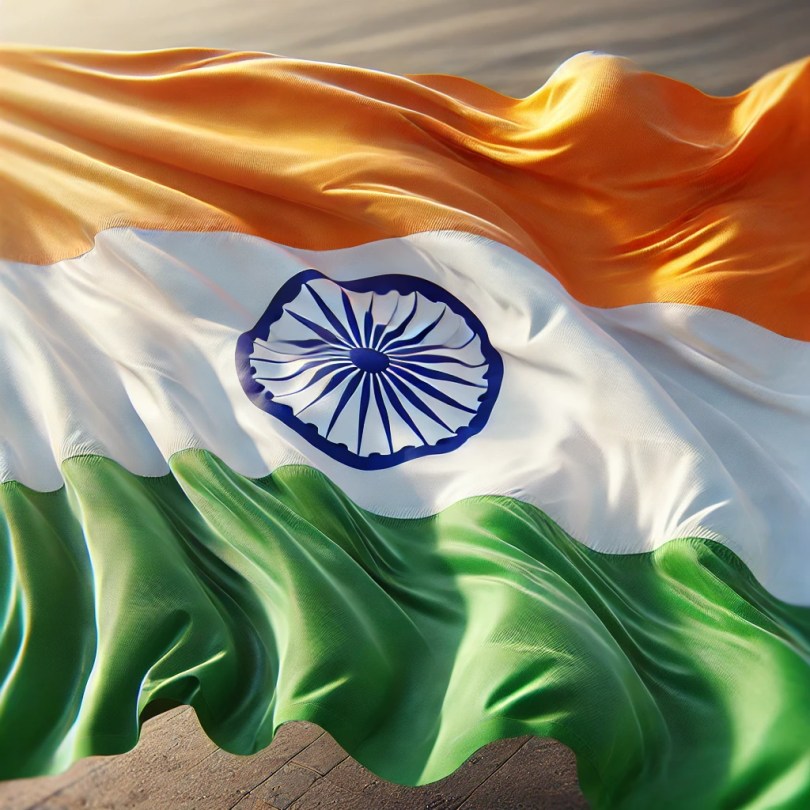
India National Flag

India’s Path to Freedom: A Journey of Courage and Unity

How India Got Its Independence

A long time ago, India was not free like it is today. It was ruled by the British, who came from a faraway country called England. The British controlled many things in India, and the Indian people wanted to be free to make their own decisions.

The Beginning of the Struggle

The journey to independence started when the people of India began to feel that they should be the ones to rule their own country. They wanted freedom, just like how you want to make your own choices sometimes. Many brave men and women started to speak up against the British rule. They wanted to show that India should be an independent country.

The Role of Mahatma Gandhi

One of the most important leaders of the independence movement was Mahatma Gandhi. He believed in something very special called “non-violence.” This means that he wanted to fight for freedom without hurting anyone. Instead of using weapons, Gandhi used peaceful ways to protest. He and his followers would march, refuse to buy British goods, and go on hunger strikes to show how serious they were about gaining independence.

One famous event led by Gandhi was the Salt March in 1930. The British had made a law that said only they could make salt, and they made people pay a lot of money for it. Gandhi and many others walked over 240 miles to the sea to make their own salt, breaking this unfair law. This peaceful protest showed the world how unfair the British laws were.

Other Brave Leaders

There were many other leaders who helped India gain its independence. Leaders like Jawaharlal Nehru, Sardar Patel, and Subhas Chandra Bose all played important roles. Some leaders believed in peaceful protests like Gandhi, while others thought that they needed to fight back more strongly. But they all had one goal: to make India free.

The Struggle Ends

After many years of protests, marches, and difficult times, the British finally realized that the Indian people would not give up. They decided to leave India. On August 15, 1947, India became an independent country! The Indian people were very happy because now they could make their own decisions and govern themselves.

What Independence Means

Independence means that India could now have its own government, make its own laws, and choose its own leaders. The first Prime Minister of independent India was Jawaharlal Nehru, who had worked closely with Gandhi.

Why We Celebrate Independence Day

Every year on August 15th, India celebrates Independence Day. It’s a day to remember all the brave people who helped India become free. People fly kites, attend parades, and wave the Indian flag to show their love for their country.

Summary

India’s journey to independence was a long and difficult one, filled with many challenges. But with brave leaders like Mahatma Gandhi and the support of millions of people, India finally became free on August 15, 1947. Today, Independence Day is a time to celebrate freedom and remember the people who made it possible.

Fun Fact

Did you know that India shares its Independence Day with South Korea? Both countries celebrate their freedom on August 15th!

Best places for kids to visit during Chandigarh Visit

  1. Rock Garden: This unique garden, built entirely from industrial and home waste, is a fascinating place for kids to explore. The sculptures and structures made from recycled materials are sure to capture their imagination.
    • https://maps.app.goo.gl/GcuM2LYN7vN35uR37
    • The full name of the Rock Garden in Chandigarh is “Nek Chand’s Rock Garden.” It is named after its creator, Nek Chand Saini, who started building the garden secretly in 1957 using recycled materials and industrial waste. Today, it is one of the most popular tourist attractions in Chandigarh, known for its unique sculptures and structures made from recycled materials.
  2. Sukhna Lake: A serene place for a family outing, Sukhna Lake offers boating facilities which kids usually enjoy. The calm waters and surrounding greenery make it a pleasant spot for a leisurely day.
  3. Zakir Hussain Rose Garden: Kids can have a wonderful time amidst thousands of roses in this expansive garden. It’s a great place for a picnic or simply to stroll around and enjoy the beauty of the flowers.
  4. Chhatbir Zoo: Located near Chandigarh, Chhatbir Zoo is home to a variety of animals including lions, tigers, elephants, and more. It offers an exciting opportunity for kids to learn about wildlife and conservation.
  5. Leisure Valley: A long stretch of greenery in Chandigarh, Leisure Valley offers ample space for kids to play, run around, and enjoy outdoor activities. It’s a popular spot for family picnics and evening strolls.
  6. Museum and Art Gallery: The Government Museum and Art Gallery in Chandigarh houses a diverse collection of artifacts, paintings, and sculptures. It’s a great place for kids to learn about history, art, and culture.

These are just a few options, but Chandigarh has much more to offer in terms of recreational activities and entertainment for kids.

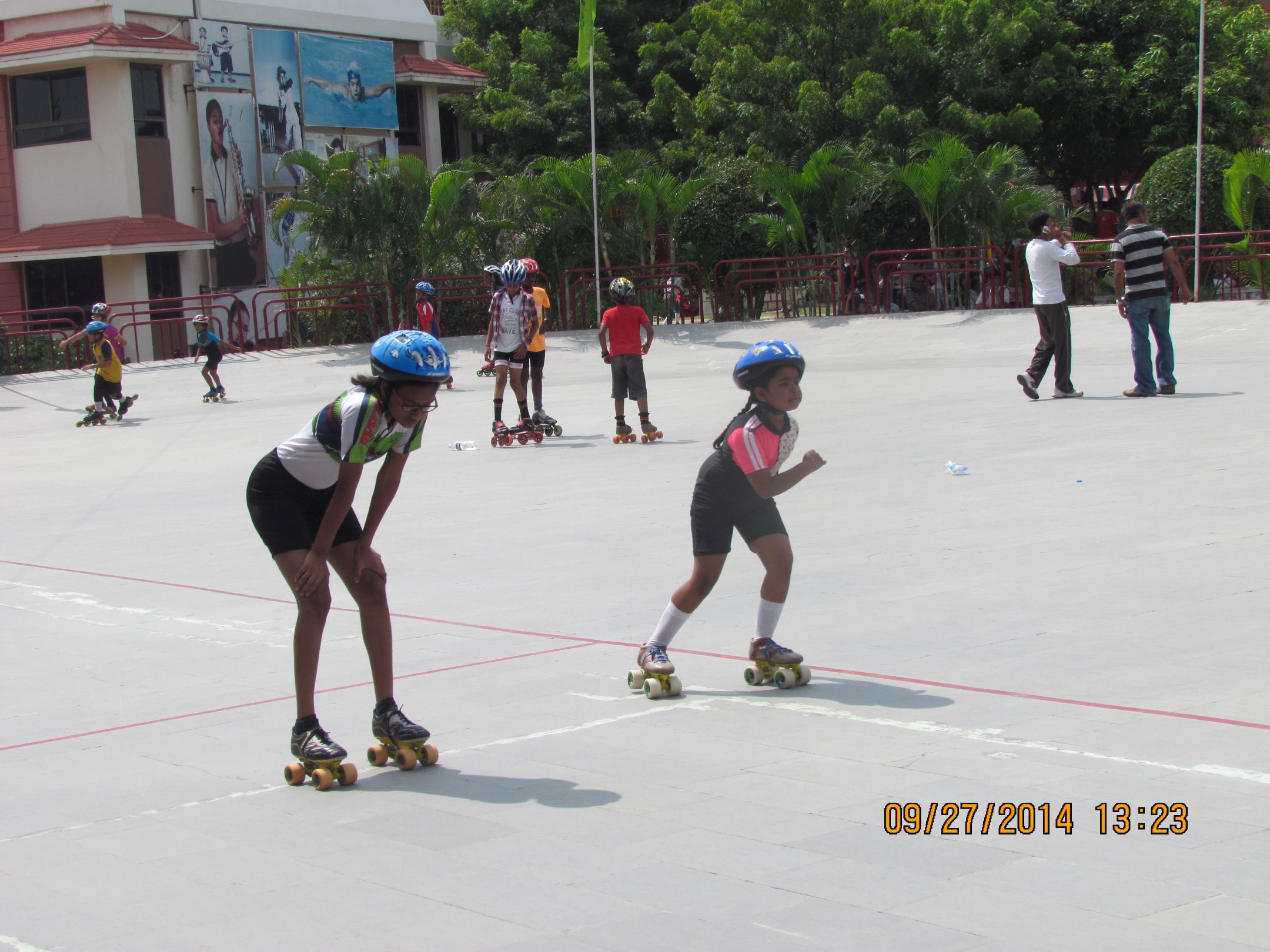
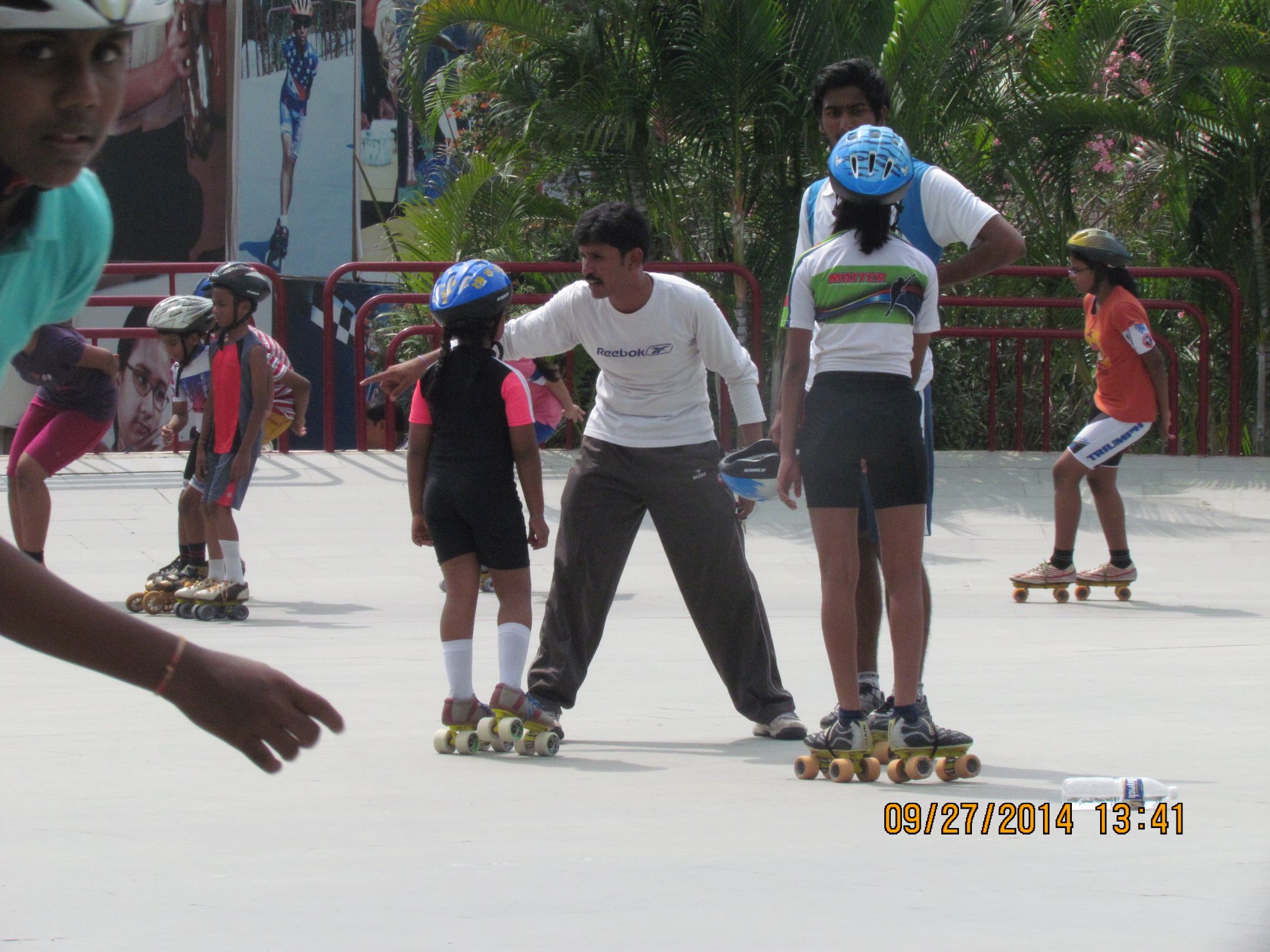
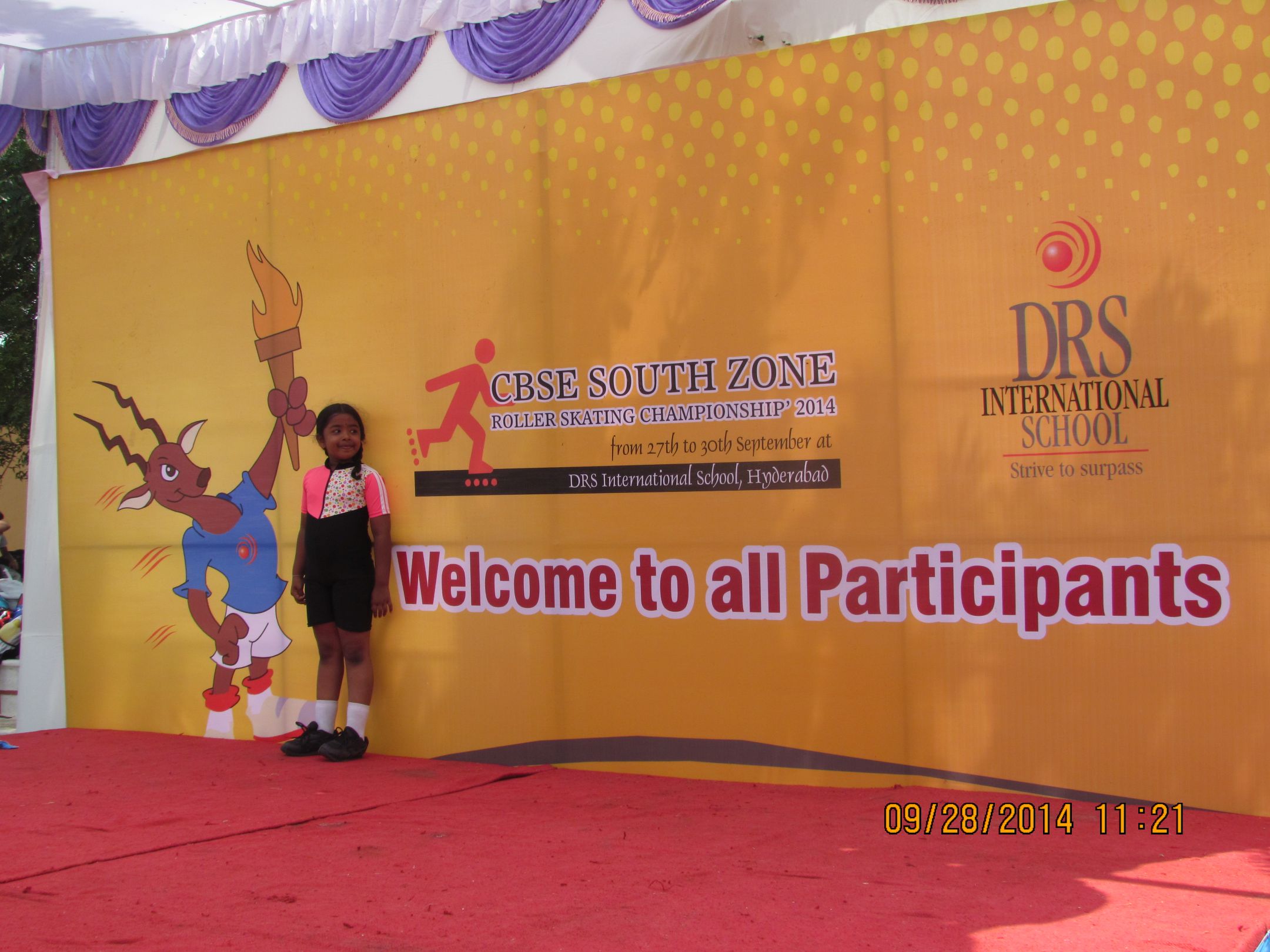
South Zone Skating Competition in Hyderabad

DRS International School Hyderabad

Silver Oaks Coach guiding skaters.

Event – CBSE South Zone Skating Championship Boys &Girls 2014 – 2015

Dated 28th to 30th September 2014

southzone skating

Organizing School Name – DRS International School Hyderabad
School Address DRS International School, Survey No:523,Opp:Apparel park, Gundlapochampally Village,Medchal mandalam, Rangaraddy Dist Hyderabad, Telangana State-500 014.

School Principal -Mr.Janajith Ray
OrganizingSecretary-Mr.Martin

Inaugural Ceremony 28-09-2014, 09:30a.m.
Valedictory Ceremony 30-09-2014, 4:30 p.m.
Contact Number 040 23792123,24,
Email sports@drsinternational.com ,
Website http://www.drsinternational.com

Location From Secunderabad Rly Stn 25 KMS
From Nampally Rly Stn 35 KMS
From Kachiguda Rly Stn 35 KMS
From Shamshabad Airport 60 KMS
From MG Bus Station Gowliguda 50 KMS

Contact Persons Mr. Martin 09959829147, 09440449945.
Mr. Noor 09246533458, 09030680166.
Mr. V Sreeramulu, 09492865250.

Best Surgeon for Hernia Problem

Dr.Mohan Das of Raghavendra Nursing Home, Shimoga, Karnataka, India is the best surgeon I have seen for hernia related problems.

From our past experience we were quite disappointed with major hospitals both in Bangalore and Mysore. Hence even though my mother was diagnosed with Hernia almost six months back we were hesitating to go for surgery. This is when my sister’s sister in law underwent Hernia surgery at Raghavendra Nursing home in Shimoga. We found the doctor to be very efficient and also could see how fast our relative recovered.

Hence without any second thought we decided we should go to Dr.Mohan das. Dr. Mohan Das might be having more than 30 years of experience in surgery. He is not soft spoken, hence many patients might get fooled by his rough and tough behavior. But we took every thing positives as we were informed of his talking styles before hand. First of all he scolded my mom for postponing the surgery for so long. He said had she come earlier the Hernia growth would have been smaller and could have gone for laproscopic surgery. Now it was big and major surgery was needed.  We got more worried. But nevertheless there was no other option.

We got her admitted on November 28th and to my astonishment I realized that the Nursing home did not have elevator. Stair case on one side and sliding path on other side to move patients in stretcher. Even though the hospital is not very posh we could see that it was neatly maintained. The corridors and all the rooms were cleaned almost thrice a day. Daily bathrooms and sink were washed. I could never smell any bad odor in the hospital premises.

29th was the Surgery and I was more tensed, my mother kept herself cool and said she was not tensed. Surgery was over by 11.30am, and she was moved to the ICU, the anesthesia effect was there hence she could not feel the pain, she spoke to all of us and I was so relieved. She told me that she kept talking with doctors when surgery was going on and it was lively. Also she was carefully shifted to other bed after surgery. She did not have any problem when she was shifted from OT to ICU.

I could remember that my experience when I was shifted from OT to Ward during my C section was not so smooth, so was my sister’s experience in Fortis Bangalore.

The good thing with this hospital is doctor came daily twice even after surgery to check the health of patient, in big hospitals the surgeon hardly visits the patient after the surgery is over. He delegates all the work to juniors. We have to keep running behind the doctors and nurses.

The nursing staff was very good and efficient, they always ensured that Patient is not hurt while giving injections, and other related procedures.

As the doctor accepts only one or two surgery per day he gives his full attention and time to patients. Also there is no hurry in discharging the patients. My mother was discharged after one week. She needs somebody’s help to get up from bed because of age factor and also her knee pain. Otherwise I definitely felt the recovery speed was better compared to previous surgeries she had.

I would suggest you go for Dr.Mohan das irrespective of your place of domicile. Shimoga is not very costly your relatives can stay in a nearby lodge and can take care of you.

The total fee was INR 60,200/- which included Surgery, all the medicines and special ward stay.

The Address of the Nursing home is

Sri Raghavendra Nursing Home
Laproscopy surgical center
G.A.Complex
JPN Road,First cross
Shimoga
Karnataka
India
Pin code – 577201

+91- 08182-224340


An Immune India!

Well Indiblogger has come up with new contest ‘An immune India’ from Dabur, and wants bloggers to write about being healthy. But as soon as I read the topic my mind ran superfast in a different direction. India is immune to what? Yes literally we are not immune to Dengue or Malaria! It still attacks us. We are not immune to obesity, cancer, heart attack, Diabetes so on and so forth. But we are more immune few things homogeneously throughout India such as

  1. Corruption
  2. Violence on Woman
  3. Attack on Self respect
  4. Attack on freedom of speech
  5. Over powering of foreign culture over Indian culture
  6. Increasing cast-ism
  7. Fake organisations
  8. Diminishing Indian Languages…

so on and on and on………..

We have built such a strong immunity to all these.

A school asks you to pay donation in cash and does not give receipt, you pay and do not argue.. we are immune to corruption. It does not touch our nerves. It never makes us get angry, or ask for a reason.

A boy is teasing a girl on the road, there are plenty of people around, but no body is bothered. Does not affect them in any way. None of my concern!

You know the auto driver has wrong meter, you do not complain, why take unnecessary risk?

The candidates know that it was a fake interview, conducted just for the sake of rules and regulations, but nobody will complain! Not affected, not bothered.

There will be 50 students in a class so around 100 responsible parents, but if the teacher makes mistakes in Notes or teaching, nobody will question. Why should I? Why not others? Why should I be the problematic parent?

Where is India heading with this kind of immunity? When does our hair stand straight and hand is ready to give a punch? when will we pick up the phone and dial 100 as soon as we see something wrong?

Is it because of this urban lifestyle that our bodies have become so weak that they no more hold any hot blood??

will Dabur help us? To be not immune to these things??

Should we laugh at this or cry??

who is Ruma Roka?

Do you know Ruma Roka?

Suppose you are attending a quiz show, and you do not know who is vidya balan, but you know who is Ruma Roka, then you can feel proud of yourself. J

Yes, it’s true. There are so many unsung heroes and heroines around us and the media never makes them popular. But it gives so much publicity to people who do not deserve it.

I came across this video on the works done by Ruma Roka through indibloggers idea caravan contest. Again another very inspiring and heart touching performance by someone who is as simple and down to earth like me and you!

Ruma Roka learnt the sign language and tried to understand the potential of the deaf and dumb comrades of our society. Then she tried to educate them, teach them how to use computer in a 2 BHK house, and starts this venture with 6 students. And can you imagine now she is able to place 580 people in different big organizations!

The punch line is deaf and dumb people work better than us, as they are not distracted by what others are talking!

That reminds of the story of the frogs which fell in the well, and the deaf one jumped up even though those on the floor were shouting you cannot do it, give up. It thought they are encouraging, and the one who could hear, got demotivated and died in the well!

Well Ruma Roka is really great. I am sure she must have had a lot of opposition, heard lot of criticism from the so called normal people of society. But her will to bring everybody to the common stream has made her achieve the real success. So what is the message?

Just be deaf to all the demotivating words when you are working towards a noble cause. We can do it too. Let us do it.

Watch her narrate her success story here

http://www.youtube.com/watch?feature=player_embedded&v=Ai3XTLyGboQ


Franklin Templeton Investments
 partnered the TEDxGateway Mumbai in December 2012.

Actions speak louder than words – Success story of Arunachalam

I feel I am lucky to have come across this Indiblogger’s Idea caravan competition. In this we are supposed to watch some videos and blog about the same. Each video is so inspiring and motivating.

In this post I am going to write about Mr.Arunachalam.

Arunachalam hails from South India and is a common man like most of us. He did not study in any IITs or foreign university. But still the simple thought of finding a solution to the everyday problem of the women of the house has made him a great Inventor. So according to him if you have to invent something, create something new, succeed in life, and then all you need is a problem!! Such a thought provoking, philosophical message is there in this statement.

He just invented low cost sanitary pads, the product already existed in the market, but at a higher price tag. Nobody thought of making one for lesser cost. They might have tried, but failed because of the monopoly of the big players in the market. But then how is that Mr.Arunachalam succeeded? Because he started it with a selfless motive. He started it for a cause. The wanted to provide a hygienic pad to all those ladies who could not afford to buy the costly ones. So without keeping profit as the motive, he just started manufacturing the pads, and also taught others to manufacture it. When he could put a factory at the top of a hill in Himalayas, which competitor will go and open his factory there!!!

The big message I get from the video is, we have to think out of the box, we need to have problems in life, welcome problems and find solutions to them, and share your learning, help others find solutions to their problems. Don’t run behind money but run for a cause. Let the cause be selfless.

And he narrates the entire experience in such a humor filled words, it sounds like humor but it’s also a reality. You will get lot and lots of punch lines in this 14 minute video. Watch the video and read the description below that to know about all this ventures, awards and accolades he got.

You can watch the video at http://www.youtube.com/watch?v=oQI0TngMm_0

Arunachalam Muruganantham http://www.youtube.com/watch?feature=player_embedded&v=u1iWhljEbTE

http://www.franklintempletonindia.com/partnered the TEDxGateway Mumbai in December 2012