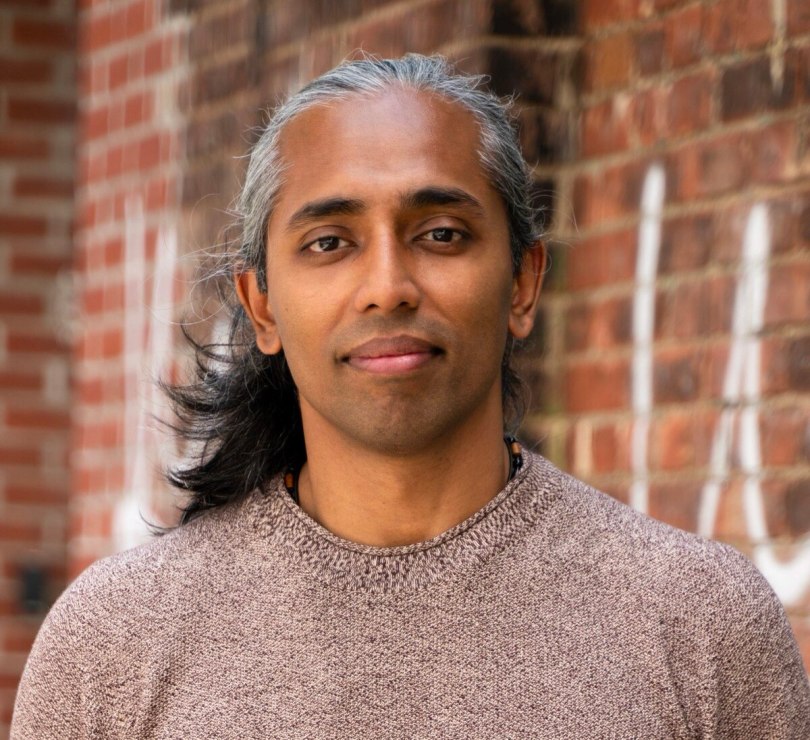
Mohammad “Mo” Shaikh is an influential American entrepreneur, investor, and policy strategist who works in blockchain, Web3, and traditional finance.
(Birth year: publicly available sources list him as born in 1986.)
He was raised in Brooklyn by immigrant parents from Pakistan — his father worked as a taxi driver, and his mother was a homemaker. (He is described as having immigrant parents because both of them moved from Pakistan to the United States before he was born.)
Mo’s childhood experiences helped shape his mission: to create a financial system that is fair and accessible for everyone.
Early Life & Education
Mo earned a Bachelor of Science degree in Economics, Psychology, and Accounting from Hunter College.
He later received an MBA in Organizational Strategy & Finance from the Simon Business School at the University of Rochester.
While in business school, he was very active in student leadership. He served as co-president of the Investment Club and also helped run a student venture fund.
Career Trajectory
Traditional Finance
Before entering the blockchain world, Mo worked in private equity (including time at BlackRock) and in strategy consulting at the Boston Consulting Group (BCG).
He advised clients in the energy, telecom, and sovereign-wealth sectors.
Blockchain & Web3
Meridio
In 2017, Mo co-founded Meridio, a ConsenSys-backed platform used to tokenize real estate on Ethereum.
One of Meridio’s early achievements was fractionalizing ownership of a Brooklyn property at 304 Troutman Street using blockchain.
Meridio was later merged into ConsenSys.
Aptos Labs
In 2021, after Meta (Facebook) shut down its Diem blockchain, Mo and engineer Avery Ching founded Aptos Labs.
Under Mo’s leadership, Aptos raised nearly $500 million from top investors such as a16z, Apollo, and BlackRock.
Aptos also built partnerships with companies like Google Cloud, Microsoft, NBCUniversal, and major global asset managers.
The company expanded worldwide — including into Asia — through moves like acquiring the Japanese firm HashPalette.
In December 2024, Mo stepped down as CEO of Aptos, but he remained a founding shareholder.
Investing & Advising
After leaving his CEO role, Mo shifted into supporting and mentoring early-stage Web3 and AI founders.
Venture Fund
In 2025, he co-founded Maximum Frequency Ventures (MFV), a $50 million fund focused on crypto infrastructure, Web3 innovation, and AI networks.
Policy & Governance
Mo was appointed to the CFTC Digital Assets Subcommittee in 2024.
He also serves on the board of trustees at Hunter College.
He frequently speaks at major global conferences — including the World Economic Forum, Milken Institute, and Point Zero Forum — where he discusses financial inclusion, regulation, and the future of blockchain.
Motivations & Philosophy
Mo’s early life, especially watching his parents struggle with traditional financial systems, inspired him to rethink how money should move in the modern world.
He believes blockchain can remove inefficiencies, helping transactions become faster, cheaper, and more transparent.
His work connects traditional finance with crypto innovation, aiming to bring Web3 technology into everyday use.
Impact & Legacy
Under Mo’s leadership, Aptos quickly became a major Layer-1 blockchain with a strong developer community and many institutional partners.
His work at Meridio helped pioneer tokenized real estate and showed how real-world assets can be shared more fairly using blockchain.
Through policy work, investing, and leadership, Mo continues to influence both the technology and regulation of digital assets.
Challenges & Critiques
Like many blockchain leaders, Mo and Aptos have faced questions about tokenomics and funding transparency.
There are also natural questions about how a founder stays influential after stepping away from a CEO role — but Mo’s launch of MFV shows that he is continuing to build in the space.
What’s Next
Growing MFV
Through his venture fund, Mo will likely invest in companies focused on crypto infrastructure, AI systems, and tools connecting blockchain with real-world use.
Policy Influence
His role in regulatory discussions may help shape how governments around the world treat digital assets.
Web3 in Emerging Markets
Mo has highlighted huge opportunities in regions like Asia and the Middle East, where older financial systems are less efficient and Web3 could help more people gain access to modern technology.
Final Thoughts
Mo Shaikh is more than a tech founder. He is someone who wants to make the financial world easier and fairer for everyone. Growing up in Brooklyn with immigrant parents taught him how difficult money and banking can be for ordinary people.
Because of that, he has spent his career trying to build better financial tools using new technology. His work at Aptos, his early real-estate blockchain projects, and now his investing and policy work all show the same goal:
help people, open more doors, and make the financial system work for everyone.
Reference
https://cryptonews.com/news/aptos-labs-ceo-mo-shaikh-resigns/?utm_source=chatgpt.com
 Lets Talk - bindumadhavi.online