Why Dogs should not eat Chocolate?

Photo by Blue Bird on Pexels.com

Ever wondered if you can share your chocolate with your dog?

Dogs should steer clear of chocolate because it contains substances known as theobromine and caffeine, both falling under the category of methylxanthines. While humans can easily metabolize these compounds, dogs process them much more slowly, rendering them more susceptible to their toxic effects.

Theobromine and caffeine can stimulate a dog’s central nervous system and cardiovascular system, leading to a range of symptoms including restlessness, an elevated heart rate, tremors, vomiting, diarrhea, and, in severe cases, seizures or death. The severity of the reaction depends on factors such as the dog’s size, the type of chocolate consumed, and the individual dog’s sensitivity to theobromine.

Dark chocolate contains higher levels of theobromine compared to milk chocolate, making it even more hazardous for dogs. While white chocolate contains minimal theobromine and is less toxic, it is still not advisable to give any chocolate to dogs.

If you suspect that your dog has ingested chocolate, it is crucial to seek veterinary attention immediately. Theobromine toxicity can escalate into a medical emergency, and swift treatment significantly improves the chances of a positive outcome.

Why do we Celebrate Children’s Day on Novermber 14th?

In India, Children’s Day is observed on November 14th every year to celebrate the birth anniversary of Pandit Jawaharlal Nehru, who was the first Prime Minister of India. Jawaharlal Nehru, fondly referred to as “Chacha Nehru” (Uncle Nehru) by children, was known for his love and affection for young people. His birthday was chosen as Children’s Day to honor his commitment to the welfare, education, and well-being of children in India.

Jawaharlal Nehru believed that children were the future of the nation and should be given the best care and opportunities for growth and development. He played a pivotal role in the establishment of various educational institutions and policies aimed at improving the quality of education in India. His vision for a better future for children made him a beloved figure among them.

Children’s Day is observed as a day of celebration and reflection on the importance of nurturing and educating the younger generation. Schools and educational institutions often organize special events, cultural programs, and activities for children to mark the occasion. It’s a day to emphasize the rights and well-being of children and to promote their all-round development.

Jawaharlal Nehru, the first Prime Minister of India, made significant contributions to children’s welfare and education in India. His dedication to improving the lives of children and his vision for their future led to several initiatives and policies that continue to impact the country’s educational system and child welfare. Here are some of his notable contributions:

  1. Promotion of Education: Nehru recognized the importance of education in nation-building and placed a strong emphasis on universal education. He advocated for free and compulsory primary education for all children.
  2. Establishment of Educational Institutions: Under Nehru’s leadership, many prestigious educational institutions were established in India, including the Indian Institutes of Technology (IITs) and the Indian Institutes of Management (IIMs). These institutions have played a pivotal role in shaping the educational landscape of the country.
  3. Incorporation of Scientific Education: Nehru believed in the importance of scientific education and its role in fostering a scientific temperament among children. He encouraged the development of scientific research and educational institutions.
  4. Children’s Literature: Nehru wrote extensively for children and authored several books, including “The Discovery of India” and “Letters from a Father to His Daughter.” His writings aimed to make complex ideas accessible to young readers and inspire them to explore their country’s history and culture.
  5. Nehru Bal Pustakalaya: He established the Nehru Bal Pustakalaya (Nehru Children’s Library) to provide children with access to a wide range of books and reading materials. This initiative aimed to foster a love for reading and learning among children.
  6. Nurturing Creativity: Nehru recognized the importance of nurturing creativity and artistic talent in children. He supported initiatives to promote arts and culture among young people.
  7. Child-Focused Policies: Nehru’s government introduced various policies and programs to address child welfare issues, such as child labor and child health. These policies aimed to protect the rights and well-being of children.
  8. Advocacy for Child Rights: Nehru played a pivotal role in India’s ratification of the Universal Declaration of Human Rights, which includes the rights of children. He advocated for children’s rights both nationally and internationally.
  9. Legacy of Leadership: Nehru’s leadership and commitment to children’s welfare set a precedent for future leaders and policymakers in India, emphasizing the importance of investing in the country’s youth.

Jawaharlal Nehru’s contributions to children’s welfare and education in India continue to shape the nation’s educational policies and institutions, and his legacy lives on through the celebration of Children’s Day and the ongoing efforts to provide quality education and opportunities for children in the country.

Career Options – Discovering top Institutes in India

Puneet Rajkumar: The Evergreen Icon of Kannada Cinema

Puneet Rajkumar, often fondly referred to as “Power Star” by his fans, was a true luminary in the world of Indian cinema. Born on March 17, 1975, in Bangalore, Karnataka, he was destined to carry forward the illustrious legacy of his legendary father, Dr. Rajkumar, one of the most iconic figures in the Kannada film industry. Puneet’s journey from childhood to his prolific acting career, which spanned until his untimely passing in 2021, was nothing short of extraordinary.

Puneet Rajkumar’s cinematic journey began at a tender age. As a child artist, he made his debut in the Kannada film industry with the movie “Bhakta Prahlada” in 1986. His endearing portrayal of the young Prahlada showcased his innate talent and marked the beginning of what would be a magnificent career.

However, Puneet Rajkumar’s true ascent to stardom came when he transitioned to lead roles in the late 1990s. His debut as a lead actor in the film “Appu” (2002), directed by Puri Jagannadh, set the stage for a series of remarkable performances. The film was a blockbuster, and Puneet’s portrayal of a rebellious young man catapulted him into the limelight. His nickname, “Appu,” became synonymous with the youthful energy and charisma he brought to his roles.

Over the years, Puneet Rajkumar proved his versatility as an actor. He effortlessly slipped into various genres, from romantic dramas to action-packed thrillers. His acting prowess shone in movies such as “Milana,” where he played a compassionate teacher, and “Jackie,” which showcased his action-hero persona.

One of the defining features of Puneet Rajkumar’s career was his ability to connect with the audience on an emotional level. His performances were marked by authenticity and relatability, making him a beloved figure in Karnataka and beyond. His role in “Akash” touched hearts with its portrayal of a visually impaired young man, and “Raj – The Showman” captured the essence of a struggling actor’s journey.

Beyond his acting, Puneet Rajkumar was a multifaceted talent. He was a gifted playback singer and lent his voice to several soulful songs that became chart-toppers in the Kannada music scene. His dedication to perfecting his craft extended to every aspect of filmmaking.

Puneet Rajkumar’s enduring appeal stemmed not only from his cinematic achievements but also from his humility, grounded personality, and his connection with his fans. He remained a role model and inspiration to many, carrying forward the values instilled by his illustrious father.

Tragically, Puneet Rajkumar’s life was cut short when he passed away on October 29, 2021. His untimely demise left a void in the hearts of millions of fans and a profound sense of loss in the Kannada film industry.

In conclusion, Puneet Rajkumar’s journey from a child artist to becoming an iconic figure in Kannada cinema is a testament to his immense talent, dedication, and the profound impact he had on the industry. His legacy lives on through his timeless performances and the indelible mark he left on Indian cinema. Puneet Rajkumar will forever be remembered as the “Power Star” who illuminated the silver screen with his charisma and talent, leaving an enduring legacy for generations to come.

Gangadhar Pantawane – Marathi Writer

Gangadhar Vithoba Pantawane (28 June 1937 – 27 March 2018) was a prominent Indian Marathi writer, literary critic, and a committed follower of B. R. Ambedkar, the visionary behind the Indian Constitution. Hailing from Maharashtra, he played a pivotal role in championing the rights and literature of the Dalit community. His influence on the Dalit literary movement in Maharashtra was profound, and he was a trailblazer in this regard.

In 2008, Pantawane achieved the honor of being elected as the president of the inaugural Marathi Vishwa Sahitya Sammelan (World Marathi Literature Conference) held in the United States. His groundbreaking journal, “Asmitadarsh,” served as a source of inspiration for countless Dalit writers and intellectuals, providing a platform for their voices to be heard and their concerns addressed.

In recognition of his significant contributions to literature and social change, Gangadhar Vithoba Pantawane received the prestigious Padma Shri award from the Government of India in 2018, a fitting acknowledgment of his enduring legacy in the realms of literature and social reform.

Some of his notable books include:

  1. “Pratibimb”: This is one of Pantawane’s acclaimed novels, known for its exploration of human relationships and societal norms.
  2. “Kalokhachya Lagnala”: Another significant novel by Pantawane, it delves into various aspects of rural life and culture in Maharashtra.
  3. “Kumudini”: This is a collection of his short stories, celebrated for their simplicity and deep themes, often portraying rural life.
  4. “Asmitadarsh”: While not a traditional book, Pantawane’s journal “Asmitadarsh” played a crucial role in the Dalit literary movement, galvanizing generations of Dalit writers and thinkers.
  5. Various Essays: Pantawane also wrote numerous essays on topics such as literature, folklore, and social issues.

These are some of the notable works by Gangadhar Pantawane, and his literary contributions have left a lasting impact on Marathi literature and the Dalit literary movement in Maharashtra.

Smart Presentation in Zoom meetings.

Zoom provides a feature called “Presenter View” that allows you to see speaker notes while presenting a PowerPoint, while the audience sees only the slides. Here’s how you can do it in Zoom:

  1. Prepare Your PowerPoint: Make sure your PowerPoint presentation includes speaker notes for each slide.
  2. Start a Zoom Meeting: Begin a Zoom meeting or join an existing one.
  3. Share Your Screen:
    • Click the “Share Screen” button in the Zoom meeting controls.
    • Select the window or application that displays your PowerPoint presentation.
  4. Enter Presenter View:
    • Once your PowerPoint presentation is being shared, click on the “Slide Show” tab in PowerPoint.
    • Click on “From Beginning” to start your presentation.
    • You will now see the presenter view with speaker notes on your screen, while the Zoom audience will only see the slide show.
  5. Navigate Through Your Presentation: You can use the presenter view to navigate through your slides and see your speaker notes. Your audience in Zoom will only see the slides.
  6. Interact with the Audience: While in presenter view, you can still interact with your Zoom audience through video, audio, chat, or Q&A features.

Why do we celebrate Teachers Day on September 5th?

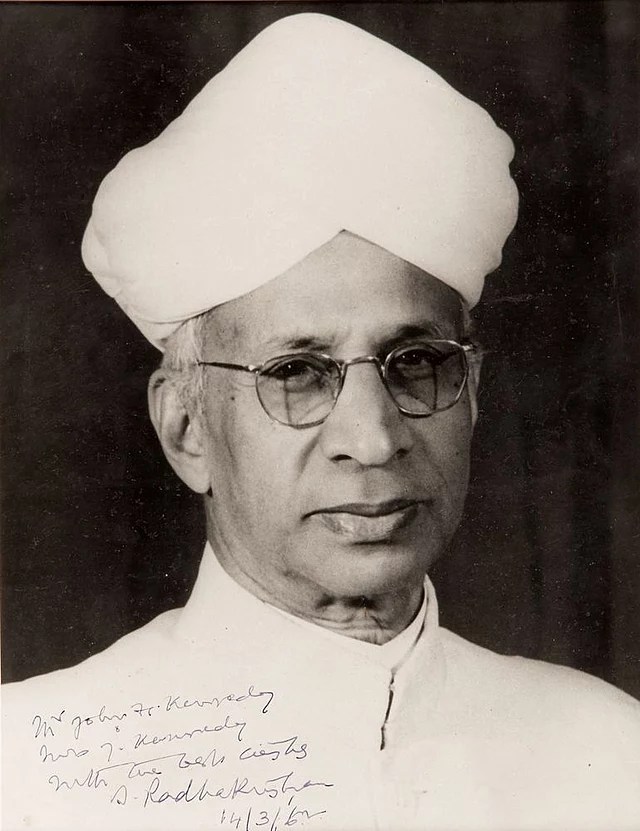
Teachers’ Day is celebrated on September 5th in India as a tribute to Dr. Sarvepalli Radhakrishnan, who was not only a renowned philosopher and scholar but also the second President of India. The significance of celebrating Teachers’ Day on his birthday lies in his own request.

Dr. Sarvepalli Radhakrishnan was born on September 5, 1888. When he became the President of India in 1962, some of his students and friends approached him and suggested that his birthday should be celebrated as a public holiday. However, Dr. Radhakrishnan, who had a deep reverence for teachers and the teaching profession, suggested that instead of celebrating his birthday, it should be observed as Teachers’ Day as a mark of respect to all teachers.

His belief was that teachers should be honored and appreciated for their contributions to society, and he wanted to emphasize the importance of teachers in shaping the future of the nation. Consequently, since 1962, September 5th has been celebrated as Teachers’ Day in India to acknowledge the hard work, dedication, and significant role that teachers play in the lives of students and in the development of the nation. It’s a day when students express their gratitude and appreciation for their teachers through various activities, ceremonies, and gestures of respect.

Mono and Bilingual Learners

Mono and bilingual learners refer to students who are either monolingual (speak only one language) or bilingual (speak two languages) in the context of ESL (English as a Second Language) education. Understanding whether a student is mono or bilingual is important because it can influence how they approach and experience the process of learning English.

Mono Learners: Mono learners are individuals who speak only one language fluently. For them, learning English is often a journey of starting from scratch. Their primary language may not have much in common with English in terms of vocabulary, grammar, or phonetics. This can present both challenges and advantages:

Challenges:

  • Limited Linguistic Connections: Mono learners may have fewer linguistic similarities between their native language and English, making it harder to draw on existing language skills.
  • Pronunciation Struggles: English sounds that do not exist in their native language can pose challenges for accurate pronunciation.
  • Conceptual Adjustments: Understanding grammatical structures and idiomatic expressions unique to English may require more effort.

Advantages:

  • Fresh Perspective: Mono learners might approach English with an open mind and fewer preconceived notions about how a language should work.
  • Focused Learning: Since they don’t have to balance the nuances of multiple languages, mono learners can focus more intently on mastering English.

Bilingual Learners: Bilingual learners, on the other hand, have a head start due to their familiarity with two languages. They already possess language learning skills and may draw upon similarities between their native language and English. However, being bilingual can also present certain challenges:

Challenges:

  • Interference: Bilingual learners might experience interference from their native language, where structures, vocabulary, or pronunciation differ from English.
  • Code-Switching: There might be a tendency to mix languages, leading to code-switching in speech or writing.
  • Cultural Implications: Bilingual learners might have to navigate differences in cultural expressions and linguistic norms between their languages and English.

Advantages:

  • Transferable Skills: Bilingual learners can apply their understanding of language structures and vocabulary from one language to another.
  • Enhanced Cognitive Skills: Being bilingual can enhance cognitive abilities like problem-solving, multitasking, and focusing attention.

Overall, whether a learner is mono or bilingual affects their learning experience in terms of the initial challenges they face and the unique advantages they bring to the learning process. Teachers can tailor their instruction to address these differences, helping students leverage their strengths while addressing specific areas of difficulty.

10 Foods Rich in Iron

Here are 10 foods that are rich in iron and can help increase hemoglobin levels in your blood:

  1. Spinach: This leafy green is packed with iron and other nutrients that support healthy hemoglobin production.
  2. Lentils: Lentils are a great source of plant-based iron, making them an excellent choice for vegetarians and vegans.
  3. Beans: Beans, such as kidney beans and chickpeas, are rich in iron and can be added to soups, salads, and various dishes.
  4. Tofu: Tofu is a versatile protein source that contains iron. It can be used in stir-fries, sandwiches, and more.
  5. Quinoa: This whole grain is not only high in iron but also provides protein and other essential nutrients.
  6. Lean Red Meat: If you eat meat, lean cuts of red meat like beef or lamb are good sources of heme iron, which is more easily absorbed by the body.
  7. Poultry: Chicken and turkey also provide heme iron, along with other important nutrients.
  8. Fish: Fish like salmon, tuna, and sardines are not only rich in iron but also provide omega-3 fatty acids for heart health.
  9. Nuts and Seeds: Nuts like almonds and pumpkin seeds, as well as seeds like sunflower seeds, can contribute to your iron intake.
  10. Fortified Cereals: Certain breakfast cereals are fortified with iron and other vitamins and minerals, making them a convenient option.

Remember that vitamin C helps enhance the absorption of non-heme iron (the type of iron found in plant-based foods), so including foods high in vitamin C (like citrus fruits, strawberries, and bell peppers) alongside these iron-rich foods can further boost your body’s ability to absorb iron and improve your hemoglobin levels

How to get H4 EAD after getting your visa stamping done.

To get an H4-EAD after getting your H4 stamping on your passport, you will need to file Form I-765, Application for Employment Authorization. You can file this form online or by mail. You will need to provide your passport information, your H4 visa approval notice, and proof of your identity and eligibility for employment in the United States.

The processing time for H4-EAD applications can vary, but it is typically around 90 days. Once your application is approved, you will be issued an EAD card, which will allow you to work in the United States.

Here are the steps on how to get an H4-EAD after getting your H4 stamping on your passport:

  1. Gather the required documents. This includes your passport, your H4 visa approval notice, proof of your identity and eligibility for employment in the United States, and a copy of your Form I-765.
  2. File Form I-765 online or by mail. You can find the form and instructions on the USCIS website.
  3. Pay the filing fee. The filing fee for Form I-765 is currently $520 for paper filings and $470 for online filings.
  4. Submit your application. You can submit your application online, by mail, or in person at a USCIS office.
  5. Wait for your application to be processed. The processing time for H4-EAD applications can vary, but it is typically around 90 days.
  6. Receive your EAD card. Once your application is approved, you will be issued an EAD card, which will allow you to work in the United States.

Here are some additional things to keep in mind:

  • You must be in the United States to apply for an H4-EAD.
  • You must have H4 status to apply for an H4-EAD.
  • You must be able to pass a background check to apply for an H4-EAD.

If you have any questions about the H4-EAD process, you can contact USCIS customer service.