Muruganandam’s Invention helps the poor

Image


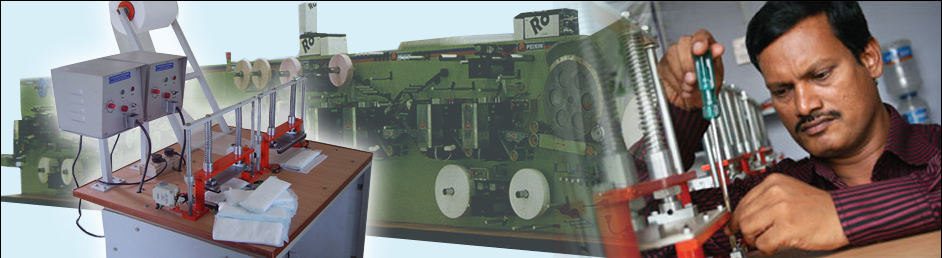
We often read about people who think out of the box and create jobs for the poor, help the society. Most often these people are from the not so educated backgrounds. Here is Mr.Muruganandam who left his studies at 10th Standard, and started working. He has come up with low cost sanitary napkins. Not only that he invented cheaper way to make hygienic product, he has trained women in rural areas and made them run their own units.


You can know more about his Industry and product here ‘Jayaashree Industries’ 


I often wonder when people like Muruganandam can contribute so much to the society, why we with double degrees, keeping searching for jobs in Naukri and Ascent??

Neighbor’s TV Volume

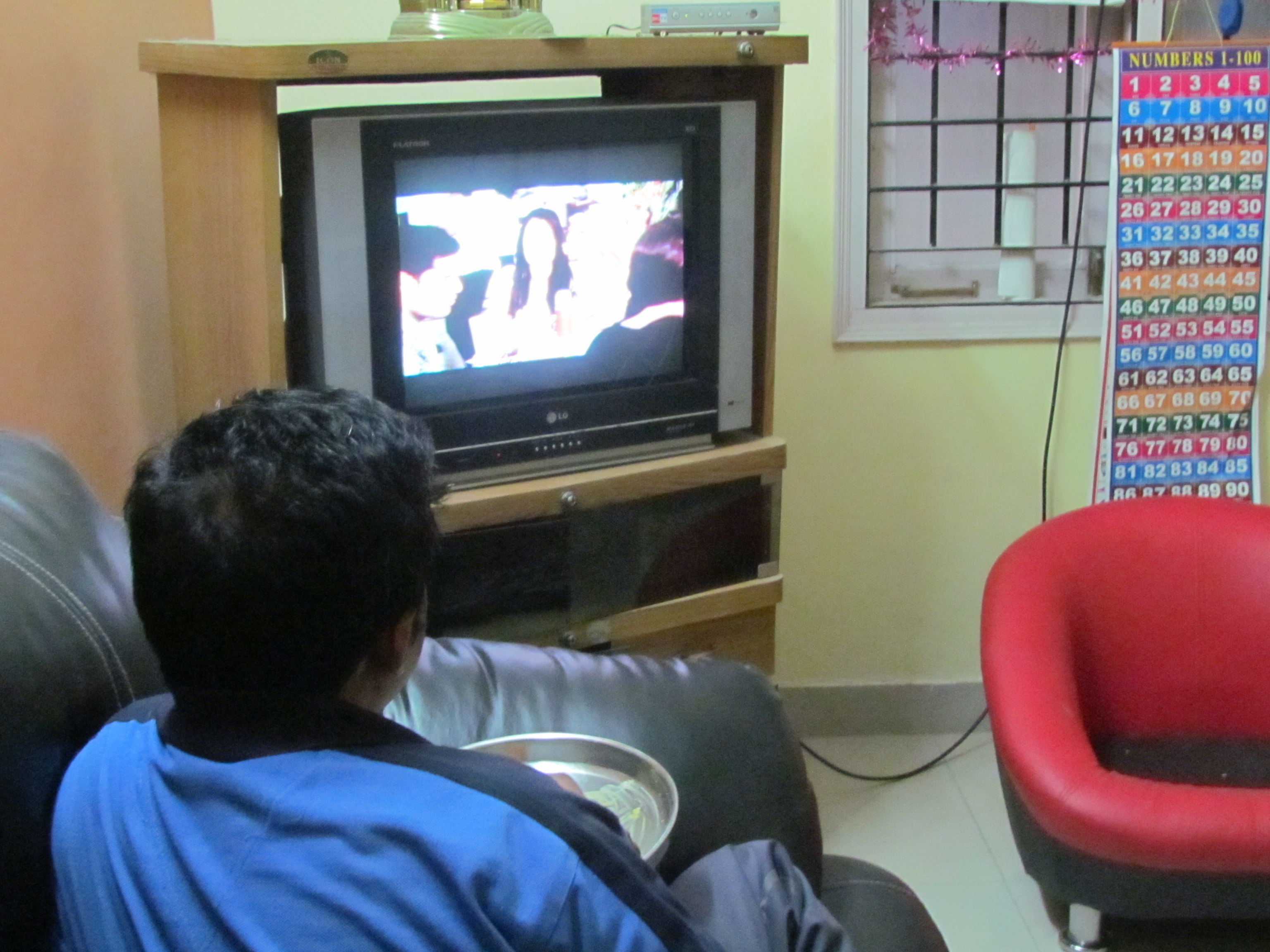
ImageIt is three years since we came to Hyderabad, and one thing I have understood is Telugu people have more passion for movies than Kannadigas. One of my neighbor would regularly watch movies in theatre even though she had a small daughter of the same age as of my daughter. Me on the other hand never went to Theatre to watch movie after Anagha’s birth, almost until she was four years old. I always thought it would be difficult to manage her in the theater or three hours. But this neighbor of mine told, her daughter also likes watching movies, else she will sleep. Anyway I did not have any trouble with Telugu people’s addiction to movies until we moved to first floor in our apartment. We were staying in second floor during first year of our stay in Hyderabad, and the house above ours was not yet occupied. So we never had any disturbance from the flat above. But when we moved to first floor, we started hearing lot of noises during night, from the house above. It sounded like moving the furniture, sometimes things falling down. We always wondered why they make so much noise. We could even hear the sound of opening and closing of wardrobe doors! We always wondered when we stayed in second floor, were they hearing the same amount of noise from our house.

But later we found that they started watching movies every Saturday night, with full volume. This was kind of ritual for them. One Saturday I found it too disturbing, my daughter was not well, and could not sleep because of the noise. Also like most of the Telugu movies, this had lot of Fighting, songs, loud dialogues. We could hear all that. I thought, its 10pm, lets wait, may be it will end. No it did not. 11pm, 12 midnight, the movie continued. We could not tolerate it longer, went to out to check if the sound is definitely from the house above ours or others, after feeling it is from the house above, my husband went and knocked the door, nobody opened. I asked him to press the calling bell. He said, no, their little son might be sleeping, why should we disturb!!

Fine, what do we do now? I asked do you have his phone number? He said yes, ok call him and tell. Then he called him and asked him to reduce the volume. He felt very sorry, and I think he switched off the TV or DVD what ever. After that we never heard the movie sound in the night. Either he missed it because of us, or might have shifted to headphones.

Now they relocated to other city, and we have a new neighbor staying in the house above. We have not yet met them yet. And one day suddenly at midnight, I started hearing TV sound. Sounded like a movie with ghosts or Rakshas of old movie types. The Rakshas would laugh quite often. I thought what kind of movie is this? I could not understand the language either. I waited for half an hour or so, then I got up. I thought of waking up my husband, then I thought, forget it, let me go and talk to them. I opened the door of our bedroom, and found that our TV is ON!!

The program was comedy circus in sony tv. And the laughter I heard was that of Archana!!

I thought how could this happen? Was my husband watching TV and slept without switching it off? No, the lights are off. Then I realized our TV was not working from evening, we tried pressing its power on button so many times, and left it. And suddenly it had become ON. I switched off the TV immediately, and thought how much the sound might have disturbed others!!!

Preparing the child for the School

Image


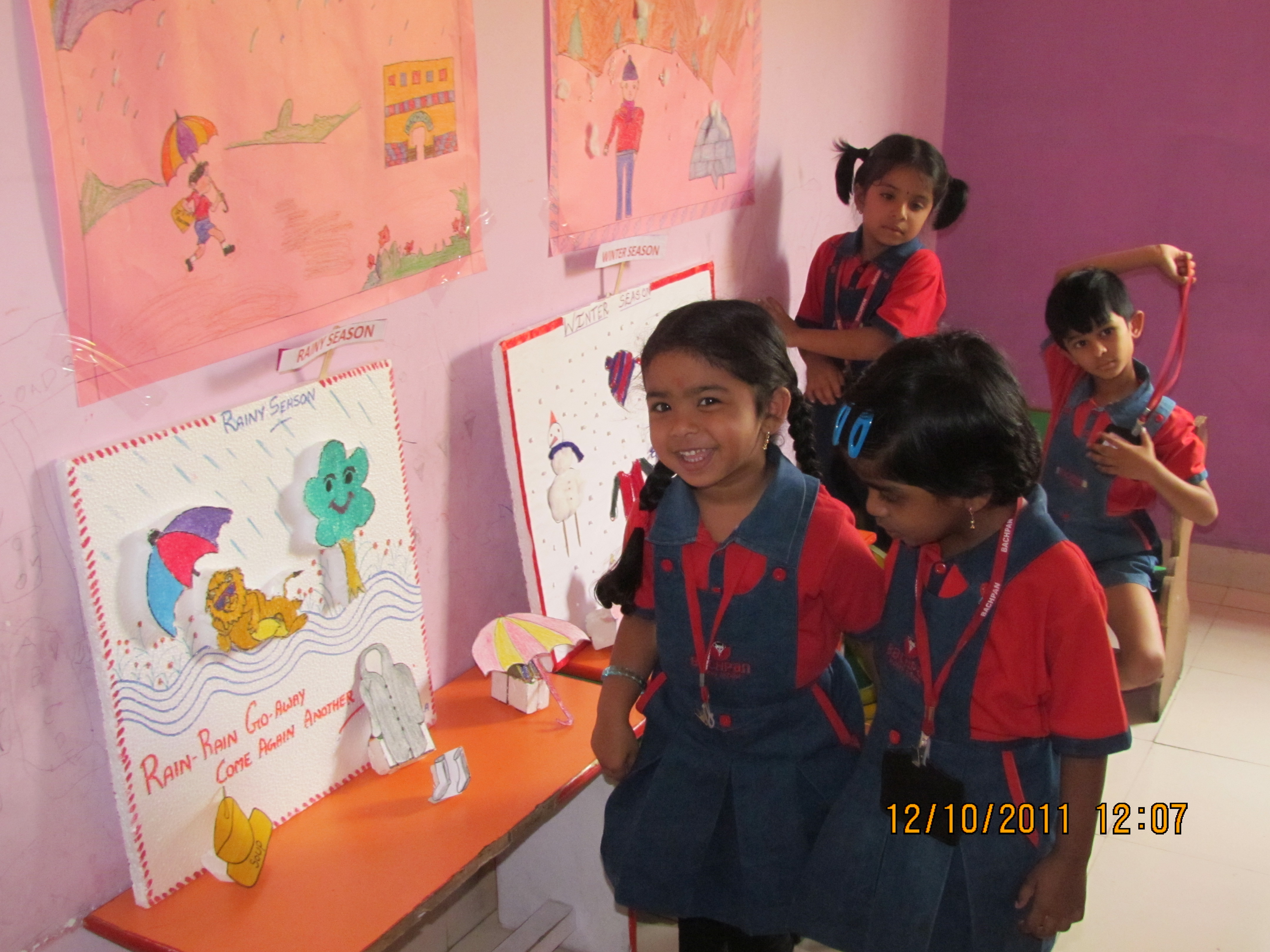
Each one of us, except a few find it difficult to make their kids adjust to the school in the initial phases. My daughter went to play school only until I accompanied her and after that I could see that she has been crying a lot and I stopped sending her. Where as a neighboring girl six months elder to my daughter never had any problem from day one! At that time I felt the reason might be our language. We speak in Kannada at home and had moved to Hyderabad just one year back. But later I found that is not the reason for her discomfort. When I put her to Nursery in Bachpan a year later, she adjusted within a week and though she hesitated in the initial weeks, later she went without much problem. By the time she came to LKG, I put her in Laurus and she went for only two days and refused to go. Then I put her back in Bachpan and she started going happily from Day one, and the timings were 9 to 2pm. Few kids go happily from day one and few don’t, so what do we do about it.


Let me share you my experience, my effort in making her feel secure outside the home. First of all take your kids to your neighbor’s house, stay there for some time. I know it’s a boring exercise, but we need to do it. I have often seen parents asking kids to play by themselves and would not like to stay in neighbor’s house for more than ten minutes. So staying in an apartment was a blessing for me. To add to that we have kids of all age groups in our apartment. She would spend lot of time with her two friends who were of the same age. Initially I would always sit with her for 10 to 15 minutes while she is playing. Then I would come home for few minutes, would go back if she cried. Then I would stay with her for long next time. Like this it went on for few months. Later she started going to these friends house all by herself and would tell me not to accompany her. You just need to make them feel safe there by going with them every time or every day for half an hour or so. After few days they become familiar with everybody in the other house and feel safe. It also gives you an opportunity to understand your neighbor, and how good is their company for your kid. So by the age of 2 and ½ years my daughter was comfortably playing in her friend’s homes. Sraddha’s house, Saanvika’s house and sometimes charisma’s house. She also picked good amount of Telugu.


I liked Bachpan, Nizampet as it has qualified teachers who are fluent in English. Also the Director Sravanti is an Engineer by education. I liked the study material, and it was definitely better option than Lilliput. I joined her in Nursery, and I took her to the school for 2 -3 days before the school reopened. So that I could stay with her while she played in the play area. I made her feel comfortable in school. It was like a park or play house where her mother accompanied her, so she was happy to go. Also I got the uniform before the school actually started, made her wear the uniform and took her to school.


When the school actually began, the Director Sravanthi told us to keep our hearts strong and brave and to leave the kid even if he or she cries. And first week the school was only for half an hour! So first week all  Nursery kids went for half an hour, though my daughter cried on first day, she didn’t cry the other days, because she thought it gets over so fast and it was fun! Next week the school was for three hours i.e. 9 to 12, but we brought her at 10.30 itself for one week. Later as she liked to come by Van with friends, we told her then you can come by Van. Coming by van meant staying till 12noon, which she did not realize.

She liked her class teacher very much. The class teacher was available to us over phone. So whenever she came home sad, I would call her and ask what happened, and she would explain. The class teacher Rama had very well understood the psychology of my child. I am sure she would have understood each child in the same way. My daughter enjoyed doing home work, as she felt it’s a matter of pride like other grown up kids. Now she too has got books and home work J


The school took them on outings once or twice. All festivals they celebrate with lot of enthusiasm. Friendship day, blue day, I day, all festivals so and so forth.  A dance teacher came to train them for the annual day function. My daughter’s song was ‘O My friend Ganesha’. She enjoyed that too. On the annual day we were supposed to send them at 8.30am, from school they would go to Auditorium, which was near hi Tech city. I was wondering whether she can manage. But to my astonishment she went happily, she was dressed up by her teachers, she did not cry on the stage.

Also at every point, I keep her informed what will happen. I will tell her, they will take you to auditorium from school; your teacher will dress you up. There will be lot of people in the auditorium. They will watch your dance and clap loudly if you dance well. So on and so forth.


She even went to wish the Governor of Andhrapradesh on Rakshabhandan with her school mates. That was again something which we doubted, but she surprised us by completing that assignment also without any crying or troubling teachers.

At the same time she could not adjust to Laurus School at all. I felt neither the teachers nor the ayahs were well trained to handle small kids.

To summarise I would tell that, it’s good to consult few parents and take their suggestion. Also every kid is different, depending on your kid’s upbringing you have to mentally prepare them for school. Never tell a kid that ‘if you don’t eat I will send you to school’ or never make statements like ‘teacher will beat you’.

Since they start walking and speaking, make them feel school is a good experience. Make them long for school. Whenever they tell I want to go to school, tell them you are too young, you should eat properly then we will send you to school. So that the child feels it’s something which it should earn, like he earns a chocolate for doing good things.

Don’t put them in school for three hours from day one. Convince the teachers and principal and leave them only for half an hour. If possible go with the kid to the school on non working days of school and spend some time there. Bring them back even when they want to play more. Put them in day care for only half an hour or one hour. Stay with them for first week, and then leave them for half an hour. For most of the kids it should be a gradual process. Don’t ask them to wear the uniform on day one, sometimes they don’t want to wear uniform because that means going to school. In that case forget about uniform, put the color dress and tell them you will just go enquire something at school. Talk about other kids coming to school. Tell them there will be birthday parties in school. If you attend school you will get more friends, you can attend more parties. I have put lot of effort to make my daughter feel comfortable at other’s houses, and school. One of my neighbor often tells me ‘hats off to you Bindu’.


Thus sharing my experiences. Hope it helps you.


Enjoy parenting.

 

Peter F Drucker

Image

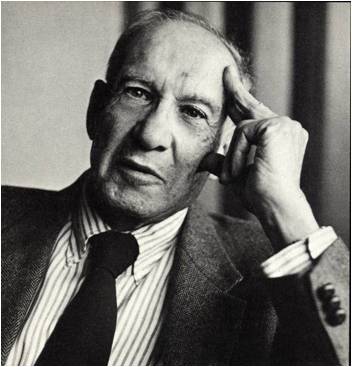
Peter Ferdinand Drucker

(November 19, 1909 – November 11, 2005)

Biography

Peter F. Drucker was born in 1909 in Vienna, Austria. He was educated in Austria and England and earned a doctorate in public and international law at Frankfurt University in Germany.

A social ecologist, writer, consultant, and retired professor, he has published 41 books. His books on economics, politics, society, and management have been translated into 37 languages. His books and scholarly and popular articles explored how humans are organized across the business, government and the nonprofit sectors of society. He is one of the best-known and most widely influential thinkers and writers on the subject of management theory and practice. His writing have predicted many of the major developments of the late twentieth century, including privatization and decentralization; the rise of Japan to economic world power; the decisive importance of marketing; and the emergence of the information society with its necessity of lifelong learning. In 1959, Drucker coined the term “knowledge worker” and later in his life considered knowledge work productivity to be the next frontier of management.


Coordinated with his writings, he developed a series of professional training programs including, most recently, a series of on-line courses on management and business strategies.

Dr. Drucker wrote a regular column in the Wall Street Journal for 20 years. He has published articles in professional journals and publications including The Economist, Harvard Business Review, The Atlantic Monthly, Financial Times, Foreign Affairs, Fortune, Inc., and Harpers.

As a consultant, Dr. Drucker specialized in strategy and policy for governments, businesses, and nonprofit organizations. His special focus was on the organization and work of top management.

He worked with some of the world’s largest businesses and with small and entrepreneurial companies. In recent years he worked extensively with nonprofit organizations, including universities, hospitals, and churches. He served as a consultant to a number of agencies of the U.S. government, with the governments of Canada and Japan, and with other nations throughout the world.

Dr. Drucker was professor of philosophy and politics at Bennington College in Bennington, Vermont from 1942 through 1949. He was professor of management at the Graduate School of Management at New York University from 1949 to 1971. In 1969, he received its highest honor, the NYU Presidential Citation.

From 1971 to 2002, Dr. Drucker was the Clarke Professor of Social Science and Management at Claremont Graduate University in Claremont, California. In 1987, CGU named its Graduate School of Management after him. It is now known as the Peter F. Drucker and Masatoshi Ito Graduate School of Management. He continues to give special presentations and lectures at the school. In 1993, he established the Peter F. Drucker Research Library and Archive at CGU (www.druckerarchives.cgu.edu).

Dr. Drucker received the Presidential Medal of Freedom, the U.S.’s highest civilian honor, and orders from the governments of Japan and Austria. He holds 25 honorary doctorates from American, Belgian, Czech, English, Spanish, and Swiss universities. He served as the president of the Society for the History of Technology from 1955 to 1960.

In his early career Dr. Drucker was economist for an international bank in London, American economist for a group of British and European banks, and American correspondent for a group of British newspapers. He and his wife, Doris, have four children and six grandchildren.

Some of the works of Peter Drucker  “The End of Economic Man: A Study of the New Totalitarianism” 1939, “The Future of Industrial Man: A Conservative Approach” 1942, “The Practice of Management” 1954, “The Effective Executive” 1967, “Post-Capitalist Society” 1993, memoir “Adventures of a Bystander” 1979

Drucker said,

  • “Unless commitment is made, there are only promises and hopes… but no plans.”
  • “Leadership is not magnetic personality–that can just as well be a glib tongue. It is not ‘making friends and influencing people’–that is flattery. Leadership is lifting a person’s vision to higher sights, the raising of a person’s performance to a higher standard, the building of a personality beyond its normal limitations.”
  • “The most important thing in communication is to hear what isn’t being said.”
  • “Effective leadership is not about making speeches or being liked; leadership is defined by results not attributes.”
  • “Management means, in the last analysis, the substitution of thought for brawn and muscle, of knowledge for folkways and superstition, and of cooperation for force. It means the substitution of responsibility for obedience to rank, and of authority of performance for the authority of rank. Whenever you see a successful business, someone once made a courageous decision.”


Revolution 2020 – Chetan Bhagat

Just finished reading Revolution 2020. Good one. Once you start reading it, you cannot do anything else until you finish reading it.

Somehow I did not like the way the story starts, the author meets the character and he tells the story. 

Also it answers some questions which I personally had about some Educational institutions.!! I was wondering how they will manage to open a college, how can they run it so on and so forth… and the novel gave me answers!!

Ends on an emotional note, brings tears in eyes. Definitely it makes you laugh at many places.

As usual reminds us of the student life, the coaching classes, the entrance exams, better performance by friends!! 

So buy a copy and read it..

Death Rehearsal

This are few lines from Amitabh Bachchan’s blog, just liked it, and thought of sharing

My Father wrote a piece, of a short blank verse poem, on Death and Sleep –

It is titled ‘Rehearsal’ and goes as follows –

Sona,

Marne ka rehearsal hai

Jo insaan har din karta hai,

Par maut ke stage par aate

Darta hai ~

Sleep is the rehearsal of death, that mankind indulges in every day. Yet fears to come on the stage of death.

We practice and rehearse death in a sense, everyday when we go off to sleep. Yet are scared to appear on the stage of death.

Worth thinking !! Would it not be wonderful to rehearse this everyday but have the strength to come on the stage and deliver when asked. So what I would write in sleep induced state would it not reflect a sample of my ‘rehearsals’. And would that not in a sense give us a window on what actually transpires when our souls leave us – a question that has been in the minds of the human race ever since its evolution. What really happens to us when we are gone. Where actually do we go ? Where are these gates of Heaven and Hell ? Is there truly this great big man with a white beard that welcomes us ?

Hmmm … ! Better to let this remain with the sleep induced rehearsals and not go further. Better to not appear on that ’stage’. Better … For none of us will ever get to know what it is. And none of us is ever going to come back and recount it for us !

Amitabh Bachchan .. read more at http://bigb.bigadda.com/


Tryst with Destiny by Jawaharlal Nehru

Tryst with Destiny 14-15 August, 1947-Jawaharlal Nehru

With the clock striking the midnight hour on 14-15th August, 1947, India was ‘toawake to freedom’. The Constituent Assembly to whom power was to be transferred began its sitting at 11 pm with Smt Sucheta Kripalani singing Vande Mataram. It wasa historic and memorable occasion in the life of the Constituent Assembly.After an address by the President, Jawaharlal Nehru made his now famous Tryst withDestiny speech.

He called upon the members to take a solemn pledge to serve Indiaand her people.Long years ago, we made a tryst with destiny, and now the time comes when we shall redeemour pledge, not wholly or in full measure, but very substantially. At the stroke of the midnighthour, when the world sleeps, India will awake to life and freedom. A moment comes, whichcomes but rarely in history, when we step out from the old to the new, when an age ends, andwhen the soul of a nation, long suppressed, finds utterance. It is fitting that at this solemnmoment we take the pledge of dedication to the service of India and her people and to the stilllarger cause of humanity.At the dawn of history India started on her unending quest, and trackless centuries are filled withher striving and the grandeur of her successes, and her failures. Through good and ill fortunealike she has never lost sight of that quest or forgotten the ideals which gave her strength. Weend today a period of ill fortune and India discovers herself again. The achievement we celebratetoday is but a step, an opening of opportunity, to the greater triumphs and achievements thatawait us. Are we brave enough and wise enough to grasp this opportunity and accept thechallenge of the future ?Freedom and power bring responsibility. The responsibility rests upon this Assembly, a sovereignbody representing the sovereign people of India. Before the birth of freedom, we have enduredall the pains of labour and our hearts are heavy with the memory of this sorrow. Some of thosepains continue even now. Nevertheless, the past is over and it is the future that beckons to usnow. That future is not one of ease or resting but of incessant striving so that we might fulfil thepledges we have so often taken and the One we shall take today. The service of lndia means theservice of the millions who suffer. It means the ending of poverty and ignorance and disease andinequality of opportunity. The ambition of the greatest man of our generation has been to wipeevery tear from every eye. That may be beyond us but as long as there are tears andsuffering, so long our work will not be over.And so we have to labour and to work and work hard to give reality to our dreams. Thosedreams are for India, but they are also for the world, for all the nations and peoples are tooclosely knit together today for anyone of them to imagine that it can live apart.Peace has been said to be indivisible; so is freedom, so is prosperity now, and so also is disasterin this one world that can no longer be split into isolated fragments. To the people of India,whose representatives we are, we appeal to join us’ with faith and confidence in this greatadventure. This is no time for petty and destructive criticism, no time for ill-will or blamingothers. We have to build the noble mansion of free India where all her children may dwell.I beg to move, sir, that it be resolved that:After the last stroke of midnight, all members of the Constituent Assembly present on thisoccasion, do take the following pledge:

(1)At this solemn moment, when the people of India, through suffering and sacrifice, havesecured freedom, I a member of the Constituent Assembly of India, do dedicate myself in allhumility to the service of India and her people to the end that this ancient land attain her rightfulplace in the world and make her full and willing contribution to the promotion of world peace andthe welfare of mankind.

(2)Members who are not present on this occasion do take the pledge (with such verbal changesas the president may prescribe) at the time they next attend a session of the Assembly.Reference:Constituent Assembly Debates

Forwarding Resume

Hi Friends,


Everyday most of us keep getting resumes of friends, Friend’s relatives, Friend of Friend etc.  To whom would you forward that resume? To decide that you need to know the qualification and other details about the candidate.  If that is not mentioned in the mail we need to open the resume file, read it then decide where to send the resume. Thus we will postpone the job of opening and reading it, as we will have more important jobs.

Thus it is necessary for the sender to include some basic details like qualification, years of experience, field of expertise so that it becomes easy for the receiver to forward the same. It might often happen that we would not have gone through all the resumes we have got from friends, and some other friends might be having a requirement and we would not be knowing that somebody in our network had requested for the same.

Thus I just wrote this post so that who ever reads this, when ever you forward resume of any person for that matter, in order to help them out please include basic details.

If that is mentioned whenever we come across matching requirement we can get back to them. We can also know who is the right person to whom we should send that particular resume.

Its not enough these days if one mentions he is an engineer in Computer Science, we cant blindly send it to the HR of any software company, we need to know what is the specialization of this person, what is the requirement at the company etc. Thus it would be better to mention Mr/ Ms X with computer science degree and having exposure to Java xyz, is looking for openings in so and so fields…

Dont you agree??