Indians Joining Foreign Armies: A Rising Concern and Its Implications

Introduction

The recent revelation by India’s Ministry of External Affairs (MEA) that at least 126 Indian citizens have joined the Russian army to participate in the ongoing Russia-Ukraine war has sparked significant debate. This phenomenon raises serious legal, ethical, and diplomatic questions, especially given India’s neutral stance on the conflict. This article explores the motivations behind such decisions, the legal ramifications, and the broader geopolitical consequences.


Motivations Behind Joining Foreign Armies

  1. Economic Incentives:
    • Many individuals who enlist in foreign militaries are driven by economic hardship and the promise of financial stability. Foreign armies, particularly during active conflicts, often offer attractive compensation packages to volunteers.
  2. Ideological Alignment:
    • Some individuals may feel a deep personal connection or ideological alignment with one side in the conflict. For instance, they may perceive the conflict as a moral or cultural cause worth supporting.
  3. Recruitment Networks:
    • Reports suggest that online platforms and social media are increasingly being used to recruit foreign nationals for military service. These channels often target vulnerable individuals through propaganda and false promises.
  4. Adventure and Prestige:
    • For some, joining a foreign military represents an opportunity for adventure, recognition, or prestige that may not be achievable in their home country.

Legal Implications

  1. Violation of the Foreign Enlistment Act (1870):
    • Indian law prohibits citizens from serving in foreign militaries without government authorization. Violators may face prosecution, fines, and imprisonment upon returning to India.
  2. International Legal Concerns:
    • Participation in conflicts could place individuals at risk of violating international humanitarian laws, particularly if they become involved in war crimes or activities targeting civilians.
  3. Citizenship Risks:
    • Serving in a foreign military might jeopardize the citizenship status of individuals, depending on the laws of their home country and the host nation.

Diplomatic and Geopolitical Consequences

  1. India’s Neutrality Compromised:
    • India has maintained a neutral stance on the Russia-Ukraine war, advocating for diplomacy and dialogue. The involvement of Indian nationals in the conflict could undermine this neutrality and strain relations with Ukraine and its allies.
  2. Strained Relations with Western Nations:
    • Western countries and organizations like NATO may perceive the participation of Indian citizens in Russia’s military as indirect support for Moscow, potentially leading to diplomatic pressures on New Delhi.
  3. Impact on Bilateral Ties:
    • Ukraine, which has historically had positive relations with India, could view the actions of these individuals as hostile, affecting bilateral trade, cooperation, and goodwill.

Government’s Preventive Measures

  1. Public Awareness Campaigns:
    • The Indian government has issued advisories warning citizens against enlisting in foreign militaries and highlighting the legal consequences.
  2. Monitoring Recruitment Channels:
    • Intelligence agencies and cybercrime units are actively working to identify and dismantle online recruitment networks operating within India.
  3. Rehabilitation and Reintegration:
    • For individuals who return, the government may consider programs for legal oversight, counseling, and community reintegration to prevent recidivism and ensure national security.

Ethical and Social Challenges

  1. Impact on Families:
    • Families of individuals who join foreign militaries often face significant stigma, emotional distress, and financial burdens.
  2. Polarized Public Opinion:
    • Public perceptions of these individuals can vary widely. While some may view them as adventurers or ideologically driven, others see them as lawbreakers undermining India’s international image.

Broader Context and Global Trends

  1. The Foreign Fighter Phenomenon:
    • The recruitment of foreign nationals is not unique to this conflict. Similar trends have been observed in the Syrian Civil War, the fight against ISIS, and other international conflicts.
  2. Global Recruitment Networks:
    • Recruitment for foreign conflicts often relies on social media, targeted propaganda, and financial incentives, making it a complex issue to address globally.

Conclusion

The involvement of Indian nationals in foreign conflicts like the Russia-Ukraine war underscores the need for robust legal frameworks, effective government intervention, and international cooperation to address this issue. While individual motivations may vary, their actions carry far-reaching implications for India’s legal, diplomatic, and social landscape.

As the global community grapples with the challenges posed by foreign fighters, India must remain vigilant and proactive in safeguarding its neutrality and international standing.

Empowering Role Models: Inspirational Figures to Guide Your Career Journey

  • Elon Musk – CEO of Tesla and SpaceX, known for his innovations in the electric car industry and space exploration.
  • Oprah Winfrey – Media mogul, television host, producer, and philanthropist, recognized for her influential talk show and media empire.
  • Cristiano Ronaldo – Professional soccer player, widely regarded as one of the greatest footballers of all time, with a massive global fan base.
  • Angela Merkel – Former Chancellor of Germany, a prominent political figure known for her leadership in European politics.
  • Beyoncé – Singer, songwriter, actress, and businesswoman, renowned for her music, influence on pop culture, and advocacy for social issues.
  • Jeff Bezos – Founder and former CEO of Amazon, one of the world’s wealthiest individuals and a key figure in the expansion of e-commerce.
  • Dr. Anthony Fauci – Director of the National Institute of Allergy and Infectious Diseases (NIAID), a leading immunologist and prominent figure in public health, particularly during the COVID-19 pandemic.
  • Jack Ma – Co-founder of Alibaba Group, a Chinese business magnate, investor, and philanthropist, known for his contributions to e-commerce and technology.
  • Serena Williams – Professional tennis player, considered one of the greatest athletes of all time, with numerous Grand Slam titles and a significant impact on the sport.
  • Malala Yousafzai – Pakistani activist for female education and the youngest Nobel Prize laureate, known for her advocacy for girls’ rights to education after surviving an assassination attempt by the Taliban.

I have a dream by Martin Luther King

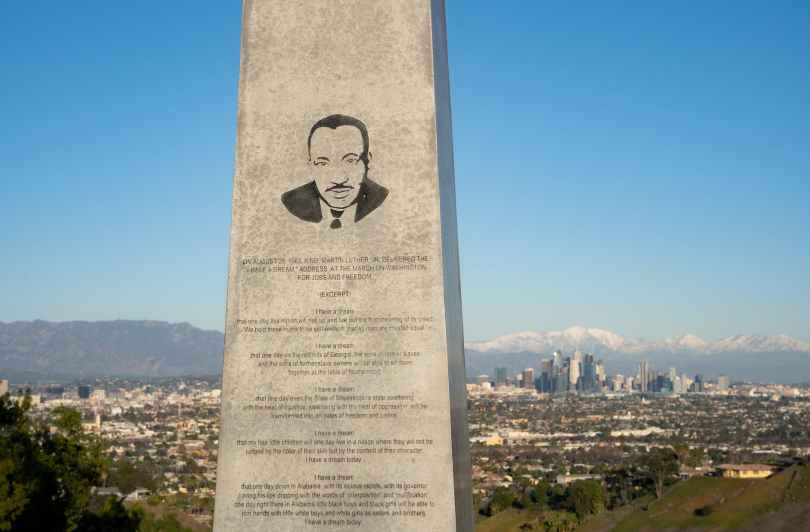
“I Have a Dream” is a famous speech delivered by Martin Luther King Jr. on August 28, 1963, during the March on Washington for Jobs and Freedom. King delivered the speech from the steps of the Lincoln Memorial in Washington, D.C. The speech is widely regarded as one of the most powerful and inspirational orations in American history.

In his speech, Martin Luther King Jr. passionately spoke about his dream of a future where people would be judged by their character and not by the color of their skin. He envisioned a nation where racial equality and justice would prevail. The famous lines “I have a dream” are repeated throughout the speech, emphasizing King’s vision for a more inclusive and harmonious society.

The speech is not only a pivotal moment in the American Civil Rights Movement but has also become a symbol of the struggle for equality and justice around the world. Martin Luther King Jr.’s dream of a more just and equal society continues to inspire people to this day.

  1. “I Have a Dream” Refrain: One of the most iconic aspects of the speech is the recurring refrain “I have a dream,” which King used to emphasize his vision for a future where racial equality and justice would prevail. The repetition of this phrase became a powerful and memorable part of the speech.
  2. Equality and Justice: King passionately spoke about his dream of a nation where individuals would not be judged by the color of their skin but by their character. He called for an end to racial discrimination and injustice, envisioning a society where everyone would have equal rights and opportunities.
  3. The “Table of Brotherhood”: King expressed his hope for a future where people of all races and backgrounds could come together in harmony. He used the metaphor of the “table of brotherhood,” where individuals from different walks of life could sit down together and work towards a shared goal of equality and justice.
  4. Quoting the Declaration of Independence: King invoked the principles of the American Declaration of Independence, emphasizing the unalienable rights of life, liberty, and the pursuit of happiness. By drawing on the nation’s founding documents, he called for these principles to be applied to all citizens, regardless of their race.
  5. The Dream of Freedom Ringing: King spoke of his dream that one day the “sons of former slaves and the sons of former slave owners” would be able to join hands and sing the words of the old Negro spiritual, “Free at last, free at last, thank God Almighty, we are free at last!” This powerful imagery conveyed his vision of a future where freedom and equality would prevail.

These highlights capture the essence of Martin Luther King Jr.’s vision for a more just and inclusive society as outlined in his “I Have a Dream” speech.

Good job officer!

This is the news from Indian express. But I wish they had also mentioned the name of the lady officer. She is really role model to everyone. And also its nice to read such news where in the law makers are upholding the rights of honest officers.

HYDERABAD: Two persons, who were accused of attacking a woman forest official at Lalgadimalakpet village near Medchal in 2016, were sentenced to two years jail and a fine of Rs 1,000 each. 

In September 2016, the official while on duty, noticed that some eucalyptus trees were being illegally cut and up on inquiry came to know that the villagers of Rajabollaram Thanda were involved. Bukya Naresh and Maloth Raju obstructed and attacked her. They used abusive language and also assaulted her subordinates.

https://www.newindianexpress.com/states/telangana/2021/dec/07/two-jailedfor-attacking-forest-officials-2392610.html

Before you decide to Volunteer

Its more than five years since I moved to America and I have volunteered at various organizations. Even though I have done various roles as a volunteer, most of it was and is teaching. There are some lessons I have learnt during this period. You might as well ask what is there to think before we volunteer? We all volunteer for a good cause and nothing should hold us back. But there are some factors which you better consider before jumping to volunteering for any organization or project.

First and foremost, we need to understand why do I want to volunteer for this project or organization? Do I understand the goals and purpose of the organization and are my values and visions in line with that of decision makers of the organization? It might be better idea to discuss with the decision makers what are the future goals of the organization. How is it going to operate in the long run? Are the rules and regulations which are true for today are going to continue for tomorrow also?

For example, I volunteered as teacher at one organization which was conducting free classes for all students interested. I had the freedom to follow my teaching methodologies, classes were free for students, I was not paid as I was a volunteer. Once in a while both teachers and students would get a mail requesting for donation for the organization which was optional. They could donate as minimum amount as they wanted or not pay at all. No one would come to know who paid or who did not pay. This is something which was in line with my idea of teaching for free.

Then there was another organization which is also a not for profit organization and I volunteered to teach there as it was open to anyone who wanted to learn the language. But there something which started as free started asking for a registration fee in the next year. Then they also made it compulsory to become members of the organization which of course was paid. So, this will put the parents who would have enrolled their kids thinking it as free into a dilemma. Also, for volunteers who started volunteering for it because it was a free course. Then quitting such projects is also hard because of the friends the students or volunteers will have. It does not matter what ever minimum amount they are charging because in the first place they attracted students and volunteers by calling it a free course.

Then there was another organization which also conducted free classes then started asking for donations for some religious institutions it supported. Here again its okay to ask for donations, but sometimes the donations become compulsory like it happens in most of the private schools in India. They make list of parents who paid and those who did not pay and then circulate it in their respective groups. Here also we get a question should I be part of it?

I have been attending another class as a student for more than two years now. The teacher never asked for any fees or donation. Even though he is a part of an organization where he learnt the skill he is teaching. I am glad we still have such teachers and want to support such teachers or volunteers and want to be one like them.

As a result, I started my own language classes which are free for everyone. It will always be free.

So, lesson learnt yes, even for volunteering you need to check is it in line with my values and my ethics?

I love Travelling but hate Travelling !!!

I love to travel, I love to visit new places, I love the long journeys in Train rather than flight. It’s good to sit on the window side of a bus and watch the trees, lakes, houses, people, kids, vehicles all go behind you. Any time of the year, the wind blowing through the windows when you are on the move is so refreshing. But still off late I have avoided traveling to as much as possible. I travel to long distances only if it is absolutely necessary.  Do you know why? It’s because of the stinking toilets. Whether we travel in ultra luxury bus, private owned bus, own car or 1 AC coach in Train the toilets you come across does stink.

Forget all these I even left my job at UCO Bank because of no separate toilet for ladies, and the toilet did not have a proper door and wasn’t kept clean. Sounds weird does it? No its the truth. Being an officer I was expected to be in bank by 10 am and stay till 8pm. Sometimes beyond that as the Branch had a currency chest and I had to wait until all the currency came. In my one week at UCO Bank I never stayed till 10pm but I did stay till 7pm almost everyday and had to use the toilet at least once in a day. Other ladies did not use it at all. Because they were in the designation of clerk, hence they came at 10.30 left at sharp 5.30 and somehow controlled during day time. But for me long hours, coming from long distance made it impossible not to use toilet. But using it was a torture. I told the manager, he said you take the initiative you get it cleaned. But the person who was appointed for cleaning the same hardly obeyed me, as I was a new employee, and I did not have any power to punish him!!

So I knew that even if I apply for transfer or if I take this matter up to higher levels I do have to use this toilet until the problem is resolved and that was not possible. So I just quit the job!!!

Ok coming back to the story of traveling, so if the situation is so worse at a nationalized bank, imagine situations at road side hotels!! Rarely we come across clean toilets. During my travel I have observed three types of people,

  1. Those who practice cleanliness, they want clean toilets and also they do pour enough water even when they use public toilets
  2. Those who want to use clean toilets but are not bothered to keep it clean for the next person
  3. those who are ok with stinking toilets, that is how it is at their home also anyway.

Thus even if a Hotel is keeping Toilets clean for travellers, by the time 10 people use it, among them there will be few people belonging to second and third category who will not bother about keeping it clean. That is why I hate travelling. The path is more important than the destination. So even before I could dream of the destination, I am lost in the worries of Toilet!!!!

Situation in villages is much more worse. Here I am only bothered about stinking toilet and because of stinking toilets no wonder few people would prefer attending nature’s call in the lap of nature itself. But that is so unsafe specially for the female folk. So many incidents happened in India which make us feel ashamed of our self and our people. Reminds of my childhood when I often visited my grandpa’s place in Somavarasanthe village of Shimoga. we had to walk some 200 feet backside the house to reach the toilet which was in the open, two wooden slabs placed on a gutter which was dug from bathroom till the farms. It was comparatively cleaner than the paternal  grandfather’s village where we had to just walk a lot of distance and fart in open lands. At my maternal grandfather’s place this arrangement was done in the boundary of the house, it had a fence around it, and thus others would not walk there. But still I was always uncomfortable as I could hear the voices of people visiting the house and talking with others. Somewhere I used to feel, then can see me!! And I never went there after the dark. I would wait till morning!!

Thanks to my uncle who build one proper toilet by the time we came to High School and he had a wife and kids. Hope every villager thinks like him and build a toilet in their house. And because of this reason we mostly spent our childhood holidays in maternal grandfather’s place than paternal because of toilet issues. The love for them was no less.

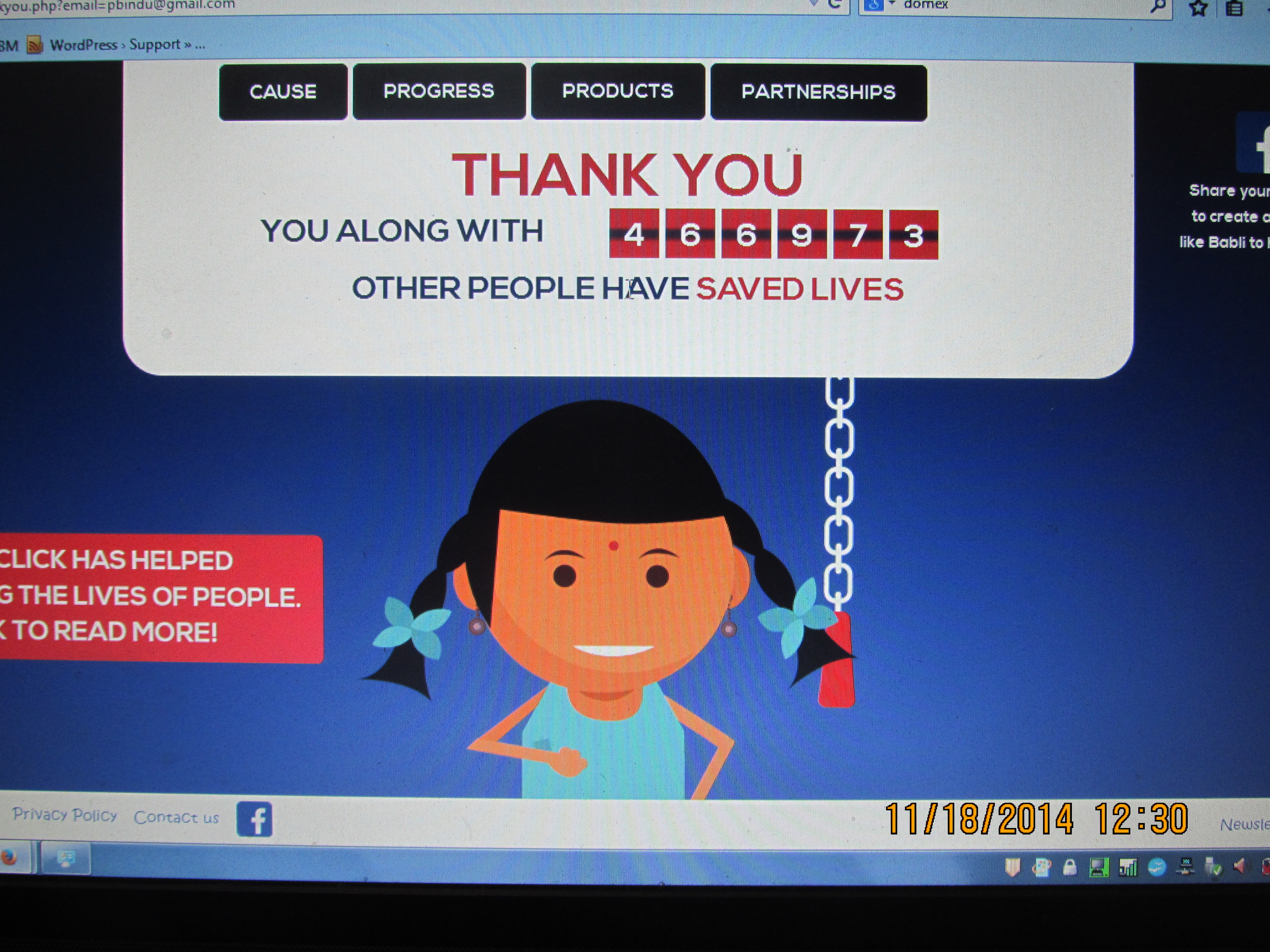
But here is a good news. Looks like I do not have to bother about Toilets anymore. Domex is taking the initiative of building toilets. Hope Things are changing for the good you can help by clicking the contribute link in Domex webpage.

You can bring about the change in the lives of millions of kids, thereby showing your support for the Domex Initiative. All you need to do is “click” on the “Contribute Tab” on www.domex.in and Domex will contribute Rs.5 on your behalf to eradicate open defecation, thereby helping kids like Babli live a dignified life.

IMG_9360

About The Domex Toilet Academy
Domex, HUL’s flagship sanitation brand, currently runs the Domex Toilet Academy (DTA) programme. Domex Toilet Academy was launched on 19th November 2013. It aims to become a sustainable and long-term solution to provide sanitation that benefits the local community and helps stimulate the local economy. The Toilet Academy makes toilets accessible and affordable, while promoting the benefits of clean toilets & good hygiene. Our effort has resulted in bringing the change in the villages of Maharashtra and Orissa and we aim to build 24000 toilets by 2015 in rural areas faced with the problem of open defecation.

Dengue Discussions

Dear Friends,

few days back I had posted a discussion thread about Dengue in Bangaloredengue. Here is the summary of the discussion. Also click this link which gives you detailed information about causes, symptoms and precautions to be taken.

Please contact doctor if you ever doubt you are feeling ill. This post is just to alarm you about Dengue and request you to take all measures to keep your family safe.

Causes

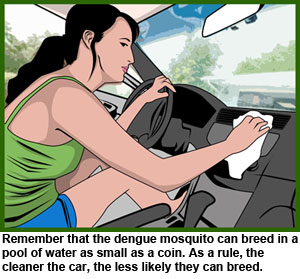
  1. Lot of people use a plate under the flower pot to prevent water from leaking and soiling of floor. It is a clean water source best for dengue mosquitoes. They also showed me new eggs ready to become lethal dengue mosquitoes. Place was quickly fumigated. Some other places that they looked for:
  2. A little bit of water leftover in a mug/bucket etc for days 
  3. Little bit of rain water that gets stuck near slider doors etc
  4. Basically, any clean source of static water kept for days is what dengue mosquito loves.
  5. If you are working from home, you are at higher risk as dengue mosquitoes are found during day time. 

Precautions

  1. Start using mosquito repellants during day time also as Dengue causing mosquitoes are active during day time
  2. You have to put a drop of Citronella Oil in each room of your house to ward off mosquitoes.
  3. Remove all source of stagnant water where mosquitoes can breed

Hospitals in Bangalore

  1. the hospitals should have platelet separation facility
  2. Fortis Bannerghatta Road has this facility.
  3. Manipal Hospital – Dr.Col Holla
  4. Rotary blood bank, Thippasandra
  5. Columbia Asia Yashwantpur has this facility
  6. Columbia Asia Hebbal does not have platelet separation facility

Symptoms

  • High fever, intense head ache, pain behind eyes, muscle and joint pain, loss of appetite, vomiting, diarrhea, skin rashes
  • If the platelet count shows a trend of falling rapidly, please do not delay admitting in a hospital, preferably a hospital with a blood bank attached. Though I am not a doctor, but as a matter of caution also keep a check on Creatinine level in the Kidneys and SPGO  and SPGT  ( liver function tests) enzyme levels. In my friend’s case these enzyme levels had gone up to 16,000 as against a upper limit of 65 and 40.
  • Adequate hydration of the patient is the key to recovery.

blood

    • It is correct that for platelets, the type of blood group is immaterial. Any group donor can give blood to the Blood Bank except persons who have diabetes or any other chronic disease. The Bank extracts platelets form the blood and the platelets are transfused to the patient.
    • Platelet count is important if it is going to sub 15000 range (Sub 10000 mark, internal body bleeding and organ failures start). That is why doctors ask to donate platelet for emergency purposes. Hence should be monitored cautiously.

VIBGYOR – POCSO ACT 2012

Dear friends,

following the incident at VIBGYOR Bangalore, its Charmain has been arrested. Here is a news article which talks about POSCO ACT and we all should know about it. I am copy pasting the content from 

http://bangalore.citizenmatters.in/articles/vibgyor-rustum-kerawala-arrested-bangalore-rape-case-posco

He has been booked under section 23 of Juvenile Justice Act for cruelty to the child, section 21 of the Prevention Of Children from Sexual Offences act (POCSO) act for not reporting rape to police, and section 201 of IPC for destroying evidence.

This means that Rustum Kerawala might face imprisonment upto seven years for destroying evidence of rape, if he is convicted. It also means that he will face imprisonment upto six months and/or fine, for wilfully neglecting the child and causing physical / mental harassment, and for not reporting rape to police or Child Welfare Committee.

“We are probing other staff members as part of investigations. We are trying to normalise the situation, and reopen the school on next Monday,” said Reddi. He added that all such cases should immediately be brought into the notice of the police.

When Citizen Matters asked whether there was enough forensic evidence in case of Mustafa, M N Reddi said, “We cannot reveal that.” When asked why is it taking so much time to arrest the second accused, Reddi said it was because it was a heinous crime and needs enough evidence.

Charges against Vigyor chairman under POSCO act

Section 21(2) of the POSCO law goes into offence comitted by heads of institutions such as the specific case of Vibgyor High School.

Any person, being in-charge of any company or an institution (by whatever name called) fails to report the commission of an offence in respect of a subordinate under his control, shall be punished with imprisonment for a term which may extend to one year and with fine.  21(2)

Bangalore police have arrested Rustum Kerawala under Section 21, in addition to other IPC codes.

POCSO section 19 and 20 refer to rules regarding intimating the police, and punishment for the offence of not intimating.

Any person whether a parent, doctor, school personnel, who has any knowledge, or even apprehension of the fact that a sexual offence has been committed must notify the Special Juvenile Police Unit or the local police.” — 19(1)

Any person, who fails to report an offence or who fails to record such an offence (in this case it is the police unit who are suppose to record the case) shall be punished with imprisonment which may extend to six months or with fine or with both. — 20(1)

The POSCO Act is a special law, which has not specified which offences are cognizable. Therefore to determine which of the POCSO Act offences are cognizable and non-bailable, reliance must be placed exclusively on Part II (Classification Of Offences Against Other Laws), First Schedule of the Code of Criminal Procedure, 1973.

Whenever the punishment is less than three years of imprisonment, the offence would be non-cognizable and bailable. Any higher term of imprisonment beginning from three years and above would make such offence cognizable and non-bailable. Hence all sections are cognizable, with the exception of section 21 and 22 which are non cognizable and bailable offences.

What do other charges mean?

Police have slapped addition charges on Kerawala as part of his arrest, Section 23 of the Juvenile Justice law  and Section 201 of the IPC.

The charge on the juvenile justice law has to do neglect or wilful abandonment of the child likely to cause mental or physical suffering. The charge on IPC 201 is grave and has to do with destruction of evidence.

Section 201 in The Indian Penal Code

201. Causing disappearance of evidence of offence, or giving false information to screen offender — Whoever, knowing or having reason to believe that an offence has been committed, causes any evidence of the commission of that offence to disappear, with the intention of screening the offend­er from legal punishment, or with that intention gives any infor­mation respecting the offence which he knows or believes to be false; if a capital offence.—shall, if the offence which he knows or believes to have been committed is punishable with death, be punished with imprisonment of either description for a term which may extend to seven years, and shall also be liable to fine; if punishable with imprisonment for life.—and if the offence is punishable with 1[imprisonment for life], or with imprisonment which may extend to ten years, shall be punished with imprison­ment of either description for a term which may extend to three years, and shall also be liable to fine; if punishable with less than ten years’ imprisonment.—and if the offence is punishable with imprisonment for any term not extend­ing to ten years, shall be punished with imprisonment of the description provided for the offence, for a term which may extend to one-fourth part of the longest term of the imprisonment pro­vided for the offence, or with fine, or with both.

Example: Suppose A, knowing that B has raped the child, destroys the evidence of rape. If B is sentenced with life or death, A will get imprisonment upto seven years and a fine. If B is sentenced with imprisonment upto 10 years, A would get imprisonment upto three years and the fine. If A is sentenced for any period less than 10 years, B would get one-fourth of that sentence and fine.

Section 23 in The Juvenile Justice (Care and Protection of Children) Act, 2000

23. Punishment for cruelty to juvenile or child.— Whoever, having the actual charge of, or control over, a juvenile or the child, assaults, abandons, exposes or wilfully neglects the juvenile or causes or procures him to be assaulted, abandoned, exposed or neglected in a manner likely to cause such juvenile or the child unnecessary mental or physical suffering shall be punishable with imprisonment for a term which may extend to six months, or fine, or with both.