Insurance Exam – New Jersey

Insurance Exam Quick Summary (Numbered Points)

  1. Irrevocable Beneficiary
    • An irrevocable beneficiary designation prevents the policyowner from making any policy changes without the beneficiary’s written consent.
  2. Adverse Selection
    • Adverse selection is the tendency of higher-risk individuals to buy insurance more often than average-risk individuals.
  3. Consideration (Life & Health Insurance)
    • Consideration consists of statements made in the application and the premium paid.
  4. Insurable Interest
    • Insurable interest must exist only at the time of application, not at the time of claim.
    • If no beneficiary change occurs, the original beneficiary still receives proceeds.
  5. Policy Forms Responsibility
    • The insurance carrier (insurer) assembles policy forms, riders, and endorsements.
    • The producer may deliver the policy but does not assemble it.
  6. Dividends from Mutual Insurers
    • Dividends are not taxable because they are considered a return of excess premium, not income.
    • Mutual insurers may overcharge initially and refund surplus.
  7. Mutual vs Stock Insurers
    • Mutual insurer = Participating
    • Stock insurer = Non-participating
  8. Do Not Call Registry
    • Insurance sales calls are NOT exempt.
    • Political organizations, charities, and surveys are exempt.
  9. Fair Credit Reporting Act (FCRA)
    • Obtaining consumer reports under false pretenses:
      • Up to $5,000 fine and 1 year imprisonment (producer)
      • Federal maximum fines may reach $10,000 (individual) and $50,000 (corporation)
  10. Contract of Adhesion
    • Insurance contracts are prepared by the insurer with no negotiation.
    • Applicant must accept on a “take it or leave it” basis.
  11. Rating Service Companies
    • Their primary purpose is to determine an insurer’s financial strength.
  12. Law of Agency
    • The producer represents the principal (insurer).
    • Agents have actual, implied, and apparent authority.
    • The insurer is legally responsible for the agent’s actions.
  13. Implied Authority
    • Unwritten authority assumed necessary to conduct business on behalf of the insurer.
  14. Group Insurance Enrollment Period
    • The enrollment period is a limited time during which eligible members may sign up.
    • It cannot exceed four months.
  15. COBRA Continuation
    • Coverage remains the same.
    • Premium may increase to 102% of the prior premium.
    • Election must be made within 60 days.
  16. Preferred Provider Organization (PPO)
    • Out-of-network care is covered, but at a lower percentage.
    • If care is outside the network with no coverage, insured may pay 100%.
  17. Suicide Clause (Life Insurance)
    • If suicide occurs within the stated period:
      • Insurer refunds premiums paid minus indebtedness
      • No interest is paid
  18. Group Disability Income Insurance
    • Covers non-occupational illnesses and injuries.
    • Occupational injuries are covered by workers’ compensation.
  19. Annuities
    • Only the policyowner can surrender an annuity during accumulation.
    • Refund annuity returns the remaining value if annuitant dies during payout.
    • Fixed Period Option:
      • Payments made for a set time
      • Beneficiary chooses the time period, not the amount
      • If beneficiary dies, remaining payments go to estate or contingent beneficiary
  20. Indexed Annuities
    • Interest is tied to a market index (commonly S&P 500).
    • Subject to caps, floors, or participation rates.
  21. Unearned Premium
    • Unearned premium belongs to the insured, not the insurer.
  22. Alien Insurance Company
    • Chartered and organized in a country outside the United States.
  23. New Jersey Licensing & Compliance
    • CE Requirement: 24 hours every 2 years, including 3 ethics hours
    • Temporary Certificate validity: 60 days
    • Branch office registration: 30 days before opening
    • Closing a branch office: Notify within 30 days
    • Producer must notify DOBI within 30 days of:
      • Address changes
      • Administrative actions
  24. Policy Delivery
    • Individual policy or certificate must be delivered:
      • At effective date or
      • Within 30 days
  25. Medicare Rules
    • Medicare qualifying events do NOT include being poverty-stricken.
    • Medicare Advantage (Part C) enrollment occurs when eligible for Medicare.
    • Medicare Supplement can be canceled for nonpayment.
    • If age 65+ and working for an employer with 20+ employees:
      • Employer plan is primary
      • Medicare is secondary
  26. Alcoholism Coverage
    • Group health-care service contracts must cover treatment for alcoholism.
  27. Disability Income Insurance
    • Designed to replace a portion of income during disability.
    • Does not replace full income or pay medical expenses.
  28. Subrogation
    • Allows the insurer to recover money from a third party responsible for the loss after paying a claim.
    • Prevents double payment and helps control premiums.
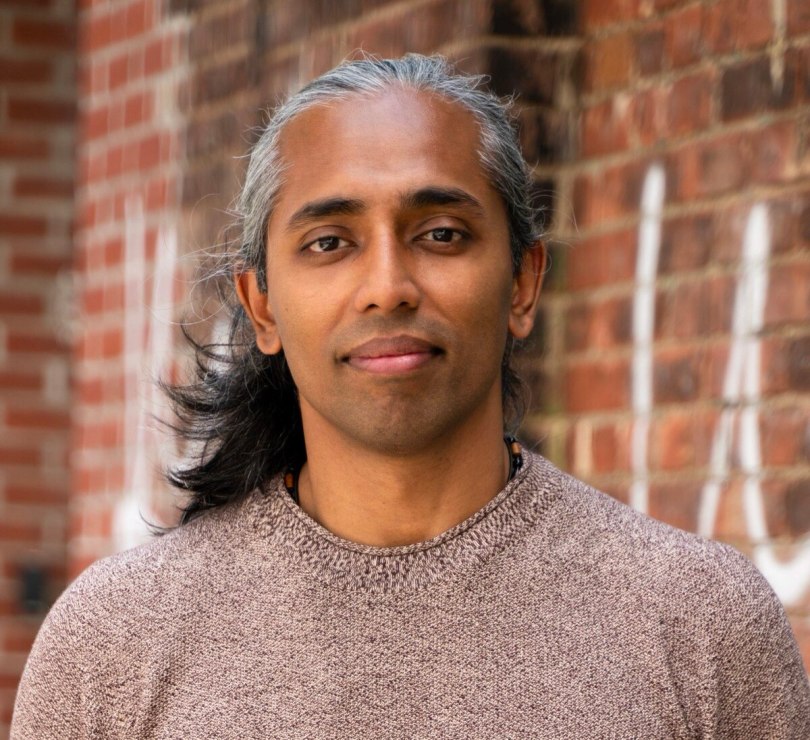
Mo Shaikh

Who Is Mo Shaikh?

Mohammad “Mo” Shaikh is an influential American entrepreneur, investor, and policy strategist who works in blockchain, Web3, and traditional finance.
(Birth year: publicly available sources list him as born in 1986.)
He was raised in Brooklyn by immigrant parents from Pakistan — his father worked as a taxi driver, and his mother was a homemaker. (He is described as having immigrant parents because both of them moved from Pakistan to the United States before he was born.)
Mo’s childhood experiences helped shape his mission: to create a financial system that is fair and accessible for everyone.


Early Life & Education

Mo earned a Bachelor of Science degree in Economics, Psychology, and Accounting from Hunter College.

He later received an MBA in Organizational Strategy & Finance from the Simon Business School at the University of Rochester.

While in business school, he was very active in student leadership. He served as co-president of the Investment Club and also helped run a student venture fund.


Career Trajectory

Traditional Finance

Before entering the blockchain world, Mo worked in private equity (including time at BlackRock) and in strategy consulting at the Boston Consulting Group (BCG).

He advised clients in the energy, telecom, and sovereign-wealth sectors.


Blockchain & Web3

Meridio

In 2017, Mo co-founded Meridio, a ConsenSys-backed platform used to tokenize real estate on Ethereum.

One of Meridio’s early achievements was fractionalizing ownership of a Brooklyn property at 304 Troutman Street using blockchain.

Meridio was later merged into ConsenSys.

Aptos Labs

In 2021, after Meta (Facebook) shut down its Diem blockchain, Mo and engineer Avery Ching founded Aptos Labs.

Under Mo’s leadership, Aptos raised nearly $500 million from top investors such as a16z, Apollo, and BlackRock.

Aptos also built partnerships with companies like Google Cloud, Microsoft, NBCUniversal, and major global asset managers.

The company expanded worldwide — including into Asia — through moves like acquiring the Japanese firm HashPalette.

In December 2024, Mo stepped down as CEO of Aptos, but he remained a founding shareholder.

Investing & Advising

After leaving his CEO role, Mo shifted into supporting and mentoring early-stage Web3 and AI founders.

Venture Fund

In 2025, he co-founded Maximum Frequency Ventures (MFV), a $50 million fund focused on crypto infrastructure, Web3 innovation, and AI networks.


Policy & Governance

Mo was appointed to the CFTC Digital Assets Subcommittee in 2024.

He also serves on the board of trustees at Hunter College.

He frequently speaks at major global conferences — including the World Economic Forum, Milken Institute, and Point Zero Forum — where he discusses financial inclusion, regulation, and the future of blockchain.


Motivations & Philosophy

Mo’s early life, especially watching his parents struggle with traditional financial systems, inspired him to rethink how money should move in the modern world.

He believes blockchain can remove inefficiencies, helping transactions become faster, cheaper, and more transparent.

His work connects traditional finance with crypto innovation, aiming to bring Web3 technology into everyday use.


Impact & Legacy

Under Mo’s leadership, Aptos quickly became a major Layer-1 blockchain with a strong developer community and many institutional partners.

His work at Meridio helped pioneer tokenized real estate and showed how real-world assets can be shared more fairly using blockchain.

Through policy work, investing, and leadership, Mo continues to influence both the technology and regulation of digital assets.


Challenges & Critiques

Like many blockchain leaders, Mo and Aptos have faced questions about tokenomics and funding transparency.

There are also natural questions about how a founder stays influential after stepping away from a CEO role — but Mo’s launch of MFV shows that he is continuing to build in the space.


What’s Next

Growing MFV

Through his venture fund, Mo will likely invest in companies focused on crypto infrastructure, AI systems, and tools connecting blockchain with real-world use.

Policy Influence

His role in regulatory discussions may help shape how governments around the world treat digital assets.

Web3 in Emerging Markets

Mo has highlighted huge opportunities in regions like Asia and the Middle East, where older financial systems are less efficient and Web3 could help more people gain access to modern technology.


Final Thoughts

Mo Shaikh is more than a tech founder. He is someone who wants to make the financial world easier and fairer for everyone. Growing up in Brooklyn with immigrant parents taught him how difficult money and banking can be for ordinary people.

Because of that, he has spent his career trying to build better financial tools using new technology. His work at Aptos, his early real-estate blockchain projects, and now his investing and policy work all show the same goal:
help people, open more doors, and make the financial system work for everyone.

Reference

https://www.moshaikh.com/

https://cryptonews.com/news/aptos-labs-ceo-mo-shaikh-resigns/?utm_source=chatgpt.com

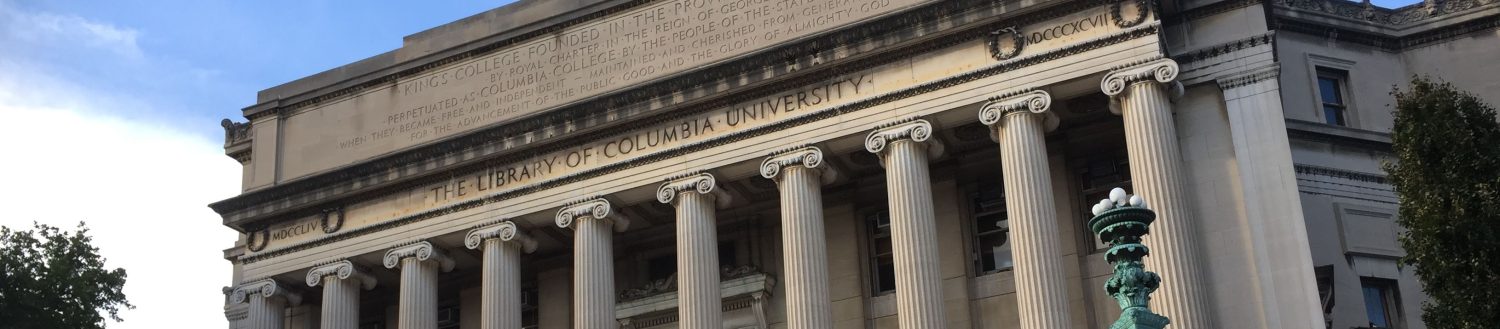
Why Columbia University is called “Columbia University”


Wondering about Colombia country, I was thinking why do we have Columbia University, Washington District of Columbia in USA. How is it related… So here is what I found.

1. It started as “King’s College” (1754)

  • Founded in 1754 in New York City, when the area was still under British rule.
  • It was established by King George II of England, so it was named King’s College.
  • It was the fifth-oldest college in the U.S. (after Harvard, William & Mary, Yale, and Princeton).

2. After the American Revolution, “King’s College” didn’t sound so good

  • When the U.S. gained independence in 1776, people no longer wanted anything with “King” in the name.
  • The college closed temporarily during the war and later reopened with a new, patriotic identity.

3. “Columbia” = poetic name for America

  • In the 1700s and 1800s, “Columbia” was a poetic or symbolic name for the United States.
  • It comes from the name Christopher Columbus, the explorer often credited with “discovering” the Americas.
  • So “Columbia” meant “Land of Columbus” — and represented freedom and the new nation.

4. Renamed Columbia College (1784) → Columbia University (1896)

  • In 1784, after independence, it was renamed Columbia College to honor the new nation.
  • Later, as it grew into a major research institution with multiple schools (law, medicine, etc.), it officially became Columbia University in 1896.

5. Today

  • Columbia University in the City of New York is one of the Ivy League universities.
  • It is famous for:
    • Nobel Prize winners
    • Pulitzer Prize administration
    • Core Curriculum
    • Alumni like Barack Obama and Alexander Hamilton

Beginner-friendly roadmap for your $500 trading account

Here’s a beginner-friendly roadmap for your $500 trading account — structured so you learn the basics, manage risk, and gradually understand higher-return strategies, without getting overwhelmed.


1️⃣ Start with the Right Markets

Focus on markets that are low-cost to enter, liquid, and beginner-friendly:

MarketWhy Start HereNotes
StocksEasy to understand; small investments possible; foundational for learning trading psychologyUse fractional shares if $500 isn’t enough for full shares
OptionsGood for learning leverage and hedging; small contracts can be affordableStart with basic calls/puts, avoid complex spreads initially
ForexAccessible for small accounts; 24/5 trading; good for learning price actionStart with micro-lots, demo trading first
BondsSafe, long-term learning, but less relevant for active trading with small capitalOptional for now
FuturesSkip initially; high leverage is risky with $500Learn later after gaining experience

2️⃣ Focus on Key Strategies

These strategies teach trading discipline, risk control, and market awareness:

StrategyWhy It MattersBeginner Tip
Risk ManagementProtects your small capital; prevents big lossesAlways use stop-losses; risk ≤ 1-2% per trade
Portfolio BuildingLearn diversification even with small capitalSpread $500 across 2–3 trades, don’t put all in one
SpeculationUnderstand short-term price movesStart with demo trading first to test patterns
Portfolio HedgingProtects positionsLearn simple hedging later using options
Capital EfficiencyMaximizes returns with small fundsAvoid over-leveraging; focus on high-probability trades
Active Wealth ManagementTracking and adjusting tradesKeep a trading journal to learn from mistakes

3️⃣ Tools to Learn First

  • Candlestick charts: Read market psychology, trend reversals, and entry/exit points
  • Support & Resistance Levels: Identify where prices might bounce or reverse
  • Volume Analysis: Understand strength behind price moves
  • Simple Technical Indicators (optional initially): Moving averages, RSI, MACD — for confirming trends

4️⃣ Practical Learning Path

  1. Start with demo accounts: Practice Stocks and Forex using candlestick charts and basic technical analysis
  2. Learn risk management: Decide your maximum loss per trade (e.g., 1–2% of $500 = $5–$10)
  3. Begin small: Place real trades with $50–$100 at first
  4. Track everything: Keep a journal — note entry, exit, reasoning, mistakes, and lessons
  5. Gradually expand: Learn Options after you’re comfortable with basic price action
  6. Optional: Later explore dividend strategies, hedging, and more advanced portfolio techniques

💡 Summary for Your $500 Start

  • Focus on Stocks, Forex, and basic Options
  • Learn Risk Management, Portfolio Building, Candlestick Patterns, and Capital Efficiency
  • Avoid complex strategies (Futures, large-scale hedging) until you gain experience
  • Always start small and track your trades

With the help of #chatgpt 🙂

Marie J. Carroll Scholar Fund _ New Jersey Scholarships

Marie J. Carroll Scholar Fund

Introduction

The Marie J. Carroll Scholar Fund is a dedicated scholarship opportunity established to support promising students who meet specified criteria and are pursuing higher education. The Fund honors the legacy of Marie J. Carroll by providing financial resources to help bridge the gap between ambition and access to post‑secondary study.

Purpose & Mission

  • The Fund exists to recognize and reward students who exemplify academic promise, personal initiative, and community engagement.
  • It aims to reduce the financial burden of college or vocational training for recipients, enabling them to focus on their studies rather than tuition‑related stress.
  • The Fund reflects Marie J. Carroll’s belief in the value of education and her commitment to fostering opportunity for the next generation.

Eligibility & Criteria

While exact eligibility requirements may vary or be updated each year, typical criteria for applicants include:

  • Graduation (or upcoming graduation) from a recognized high school or qualification relevant to the fund’s focus.
  • Acceptance or planned enrollment in an accredited college, university, or vocational/training program.
  • Demonstrated academic merit, leadership, service to the community, or other personal attributes aligned with the Fund’s values.
  • Submission of required materials: application form, transcripts, possibly an essay, and letters of recommendation.
  • Adherence to deadlines and any renewal conditions set forth by the Fund’s administrators.

Scholarship Award & Terms

  • The award amount may vary from year to year, and typically covers tuition, fees, books, or other educational costs.
  • Some awards may be one‑time grants; others may allow renewal over multiple years provided the recipient meets performance criteria (e.g., maintaining a specified GPA).
  • Funds are distributed in accordance with the recipient’s school registration and applicable administrative processes.

Impact & Value

  • Recipients of the Marie J. Carroll Scholar Fund gain not only financial relief but also recognition of their achievements, which can enhance confidence and academic momentum.
  • By investing in students, the Fund contributes to broader societal goals—expanding access to education, developing future leaders, and strengthening communities.
  • The legacy of Marie J. Carroll lives on through each student who gains new opportunity because of the Fund’s support.

How to Apply or Support

  • Prospective applicants should consult the official Fund announcement (via the managing institution or scholarship portal) for the current year’s guidelines, deadlines, and application materials.
  • Supporters and donors interested in sustaining the Fund can contact the administering organization to explore options such as endowments, one‑time gifts, or sponsorships.
  • Alumni, community groups, and friends of Marie J. Carroll may also engage by mentoring recipients, offering networking opportunities, or volunteering in scholarship review committees.

Why It Matters

In an era of rising education costs, programs like the Marie J. Carroll Scholar Fund play a vital role by making dreams more attainable. They send a message: talent and effort matter, and there are people who believe in you. For many, such scholarships can be the difference between limiting educational choices and reaching full potential.

Conclusion

The Marie J. Carroll Scholar Fund represents a meaningful commitment to student success. Whether you are a student applying, a parent guiding one, or a supporter looking to amplify educational opportunity, the Fund offers a pathway toward achievement and promise. By recognizing ambition and providing concrete support, it helps transform potential into real progress.

New Jersey – Scholarships

Ridgewood High School Scholarship Program

Introduction

The scholarship program at Ridgewood High School provides crucial support and recognition for deserving students as they transition from high school to further education. Eligible graduating seniors (and in some cases underclassmen) may apply for a range of awards based on academic merit, financial need, community service, specific career paths, or overcoming challenges.

Purpose & Scope

  • The scholarship opportunities are designed to reward drive, achievement, and potential in students of Ridgewood High School, while also easing the financial burden of post‑secondary education.
  • These awards come from multiple sources: the school’s own foundation (The Ridgewood Foundation), community organizations (e.g., the Woman’s Club of Ridgewood), and outside sponsors.
  • They vary in size, criteria, and focus, giving students with different strengths and circumstances a chance to benefit.

Key Scholarship Streams

Here are some of the major types of scholarships offered:

  • The Ridgewood Foundation Scholarships: Offered by The Ridgewood Foundation, these are one‑year, non‑renewable awards for students enrolling in a community college, university or other post‑secondary school after graduation. For example: several $4,000 awards are available. d234.org+1
  • Foundation Achievement Scholarship: Also under the Ridgewood Foundation umbrella, this award is aimed at students who have overcome exceptional challenges in their high‑school career. It’s one‑year and non‑renewable. d234.org
  • Lupo‑Romito Education Scholarship: A one‑year award ($1,000) for a student planning to pursue a career in the field of education (i.e., teaching in a classroom setting). d234.org
  • Dominick and Carmella Lupo Scholarship: A one‑year award ($2,000) for a student who has demonstrated service in the community. d234.org
  • Trades/Technology Scholarship (METT – Manufacturing, Engineering & Technology & Trades): For a student entering a technical college, trade school, or community college after graduation—one award of around $2,000. d234.org
  • Scholarships by community organizations: For example, the Woman’s Club of Ridgewood Scholarship Trust Fund supports Ridgewood HS seniors through annual scholarships that are renewable in some cases. womansclubofridgewood.com+1

Eligibility & Application Process

  • Students must attend Ridgewood High School (or be affiliated with its district) and plan to continue into post‑secondary education (college, university, trade school, or technical program). d234.org
  • Application materials typically include: official transcripts; proof of college acceptance/enrollment; essays; letters of recommendation; sometimes demonstration of financial need or community service.
  • For the Ridgewood Foundation scholarships, the application deadline is clearly specified (for example, March 28, 2025 for that year). d234.org
  • Some awards are specifically targeted (e.g., students planning education careers, trade school, or those overcoming challenges), so applicants should review criteria carefully.

Impact & Value

  • These scholarships help make college or post‑secondary pathways more accessible for students from Ridgewood High School, reducing debt burden and encouraging educational advancement.
  • They also recognise more than just academic performance—students who serve their community, overcome adversity, or pursue non‑traditional pathways (trade, technology) are acknowledged.
  • Because the awards come from a mix of the school foundation and community groups, they represent a strong collaboration between the education system and local civic life.

How You Can Get Involved or Apply

  • Students should stay aware of announcements via the Guidance Office, scholarship bulletin boards, and the school website’s scholarship section. d234.org+1
  • Parents and alumni can support by donating to the relevant scholarship funds (e.g., through The Ridgewood Foundation or community organizations).
  • Community members and organizations can establish or sponsor additional scholarships to expand opportunities for students.
  • Applicants should start early—collect transcripts, secure recommendation letters, draft essays, and check deadlines.

Why It Matters

In an environment where college costs are steadily rising, scholarship programs such as this help level the playing field for talented students whose financial means may be limited or whose educational path may require extra support. Recognising achievement in various domains—including service, resilience, and career focus—these programs enrich the school community and foster a culture of opportunity and aspiration.

Conclusion

The scholarship program at Ridgewood High School is a robust system of awards that honours student promise and ambition across diverse fields. From traditional academic pursuits to trade education, from students overcoming challenges to those committed to service, the scholarships send a message: your effort matters, your future is valued, and support is available. For any Ridgewood HS senior planning their next step, it’s well worth exploring these opportunities and applying with intention.

Scholarship Program – The 200 Club of Morris County

Introduction

The 200 Club of Morris County is a nonprofit organization based in Morris County, New Jersey, dedicated to supporting the county’s first responders and their families. The club provides recognition, emotional support, scholarships, and raises community awareness about the sacrifices and risks undertaken by public-safety personnel.

Mission and Purpose

The club emphasizes support for the brave men and women on the front lines, including police, fire departments, EMS/First Aid squads, state police, and other emergency management services in Morris County. It functions as a community-support organization rather than a benefit society for active first responders. Membership is open to citizens, business owners, professionals, and retired first responders. As a 501(c)(3) nonprofit, the club relies on donations, memberships, and sponsorships to fund its programs.

Activities: How It Supports First Responders

1. Valor & Meritorious Awards

Each year, the club honors extraordinary acts by first responders in Morris County. Valor awards recognize acts where lives were at risk, while meritorious awards acknowledge exceptional service without immediate danger. These ceremonies highlight the dedication of first responders and foster community awareness.

2. Scholarship Program

Since 1982, the 200 Club has awarded scholarships to high-school seniors who are children or wards of first responders. Eligible applicants are pursuing college, vocational training, or other post-secondary education. The scholarship program has helped hundreds of students achieve their academic goals.

3. Community Engagement & Membership

The club participates in local events to raise awareness and recruit members. Membership is open to individuals ($200) or families ($500) who are not active first responders. Retired first responders may also join. Members include a diverse range of professionals united by their support for public safety.

Governance & Finances

The 200 Club operates with transparency, relying primarily on contributions to fund its initiatives. Revenue goes toward awards, scholarships, and community outreach, while volunteer leadership oversees operations. Public records show the organization maintains strong net assets while keeping administrative costs minimal.

Impact in the Community

The club has provided death benefits to families of fallen heroes and awarded more than 700 scholarships since its founding. By publicly recognizing first responders, the club fosters community respect and strengthens the bond between citizens and emergency services.

How You Can Get Involved

  • Become a member: Join if you live or work in Morris County and are not an active first responder.
  • Donate or sponsor: Support the club financially or through event sponsorship.
  • Attend events: Celebrate and recognize the contributions of first responders.
  • Encourage scholarship applicants: High school seniors connected to first-responder families are eligible.

Why It Matters

First responders face increasing challenges in modern society. Organizations like the 200 Club of Morris County provide essential support to these heroes and their families, while fostering recognition, morale, and community trust.

Conclusion

The 200 Club of Morris County is a community-driven organization that ensures first responders are recognized, supported, and celebrated. Through awards, scholarships, and engagement, it bridges the gap between the public and those who serve selflessly every day.

Capgemni supertechies show

Just sharing here my participation in Capgemini Supertechies show.

https://www.facebook.com/CapgeminiSuperTechiesShow/videos/465997983432245

Deepavali event in Edison New Jersey 2025

Edison Township will mark the Festival of Lights with a dazzling drone and fireworks display during its fourth annual Diwali celebration on October 25 at Papaianni Park.

The 18-minute drone show, sponsored by Patel Brothers, will depict the story of Diwali and begin shortly after sunset, followed by a spectacular fireworks show. Read More Here

Happy Diwali